Kyoto, about 1735. In the Higashiyama hills an old monk sets down a basket and brews tea for whoever passes. Baisaō, the old tea seller, was an Ōbaku Zen monk from Hizen who walked out of his monastery in his late forties and sold tea at the city's scenic spots for twenty years, plain steeped leaf against the whisked ceremony. He stopped in 1755, and before he died in 1763 he burned his tea things so that no ritual would grow up around them.
The tea he praised was new. In 1738 Nagatani Sōen, a tea farmer of Ujitawara, worked out the steamed, hand-kneaded Uji method, and sencha was born. Japanese green tea is steamed for fifteen to twenty seconds to stop oxidation, then rolled into thin needles, where Chinese greens are fired in a pan. Steaming gives the grassy, seaweed taste and the greener cup.
The seeds came earlier, with Eisai, the Zen monk who landed at Hirado in Kyūshū in 1191 carrying tea seeds from China. Shaded tea was kept for the upper classes; ordinary people drank bancha, and sencha came to meet their need. Genmaicha's toasted rice was a filler that made tea cheaper, the people's tea. Hōjicha, roasted over charcoal, is the evening cup for children and grandparents.
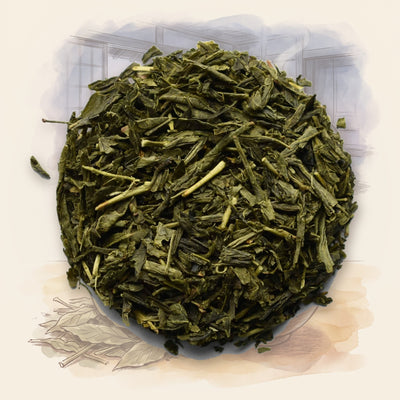
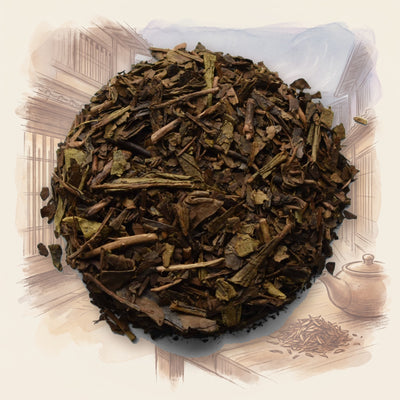
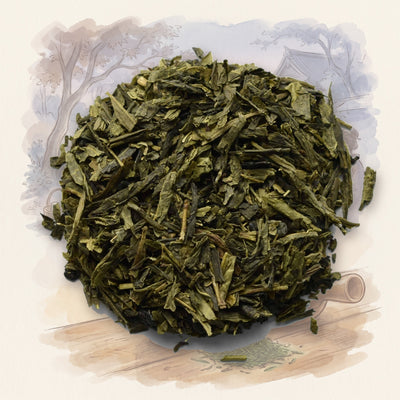
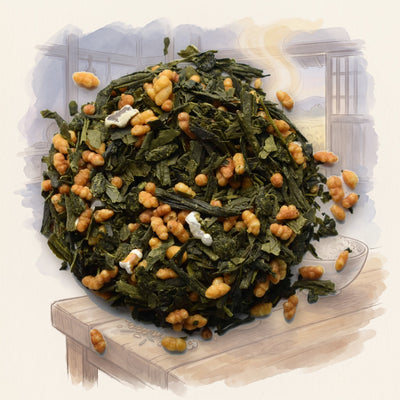
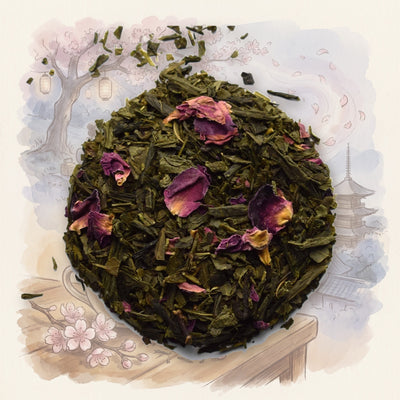
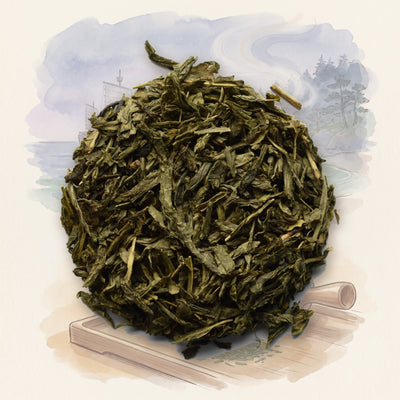
This shelf is Japan's kitchen table, not its ceremony. Sencha, Organic is the everyday cup, and Decaf Sencha Kyushu Green carries the name of the island where Eisai landed. Genmaicha, Organic is the people's tea with its popcorn, Haru's Hōjicha, Organic the one for after supper, and Sakura Cherry Blossom, Organic a sencha with cherry and rose petals, a hanami picnic in a cup.