
Ingredients · Sweetener
Maple
Acer saccharum · Sapindaceae (soapberry family)

What it’s like, and how to use it
How to use it
In a blend it sweetens and adds a smoky caramel note. With oolong, which suits it particularly. In baking, on pancakes, and in the sugar-shack meal of ham, beans, pork rinds and taffy poured on snow — the way March is eaten in Quebec.
With food
Pecan and walnut. Bacon and ham. Oats and pancakes. Squash and sweet potato. Bourbon. Apple. Cream. Smoke.
With spices
Cinnamon and nutmeg. Vanilla. Cardamom. Smoked salt. Black pepper.
With tea
Oolong, especially a roasted one. Black tea. Rooibos. Hojicha.
Its story
Where it comes from
Canada makes more than 75 per cent of the world's maple syrup — over 113.4 million kilograms in 2025 — and Quebec made 90 per cent of Canada's in 2025, along with 98.2 per cent of the country's $844.2 million in maple exports. The Quebec Maple Syrup Producers run supply management and keep a strategic reserve.
What happened
Maple sugaring is Indigenous, and that should be the first sentence rather than a footnote. The peoples of northeastern North America were the first known to make maple syrup and sugar — the Abenaki, Haudenosaunee and Mi'kmaq among them — tapping trees with V-shaped cuts or basswood tubes, catching the sap in birch-bark bowls, and reducing it by leaving it out to freeze and throwing away the ice, by dropping hot rocks into bark pots, or by boiling. The Anishinaabe called the season the maple moon. The Kanien'kehá:ka call the maple Wahta, the leader of the trees, the first to wake in spring. Pierre Boucher recorded Indigenous maple sugaring in 1664, and French settlers learned it from them. For most of its history maple was made into sugar rather than syrup, because cane sugar from the West Indies was expensive. Its strangest modern chapter is a theft: over several months in 2011 and 2012, nearly 3,000 tonnes of syrup — the contents of 9,571 barrels, worth C$18.7 million — went missing from a warehouse at Saint-Louis-de-Blandford, discovered when an inspector found the barrels empty during the annual inventory.
On the shelf with it
Every product it goes into.
-
 Sold out
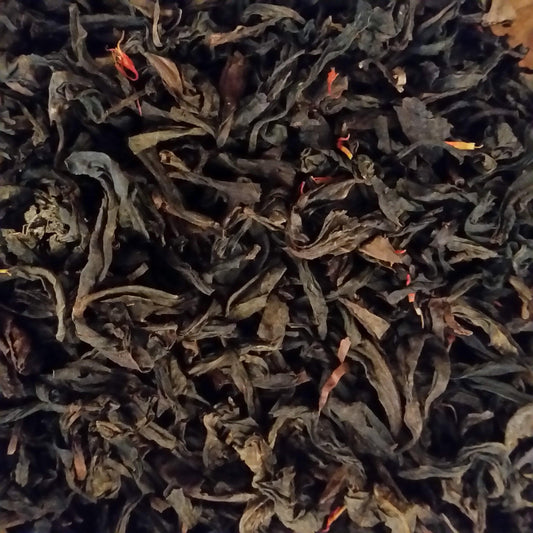
Smoked Maple Oolong, Organic
Regular price From $16.00 CADRegular price


