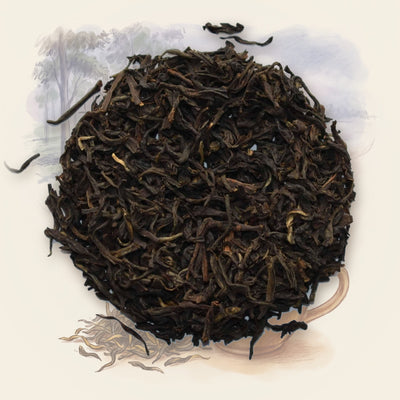
The Singpho of upper Assam were drinking tea before the British came looking for it: leaves sun-dried, left three nights in the dew, then smoked in bamboo tubes. In 1823 Robert Bruce, a Scot, met the wild plant, pointed to the chief Bessa Gam by Maniram Dewan. The British had tried Chinese tea here and failed; the plant the Empire went to China to steal grew on its own frontier.
Burma gave up the Ahom kingdom in 1826, and the British annexed it in 1838. The first Assam tea was auctioned in London in January 1839; the Assam Company started that year with Maniram as its dewan at Nazira. He left to found a garden at Cinnamara, the first Indian commercial planter in Assam, and was hanged at Jorhat in 1858 for a plot in the 1857 uprising.
The gardens were built on indentured labour from Chota Nagpur and Odisha, some of it enticed, even kidnapped. Of 84,915 recruited between 1863 and 1866, 30,000 were dead by June 1866. Flogging was common practice; from 1865 to 1901 the wage was five rupees a month for a man, four for a woman. By 1870 fifty-six of the sixty tea companies were bankrupt; machines turned it round, and by 1888 Britain took more tea from India than from China.
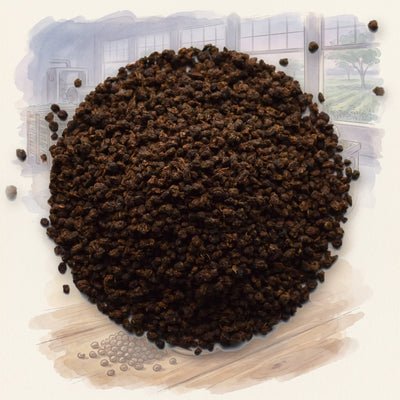
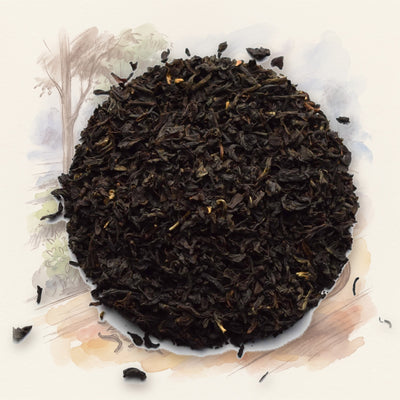
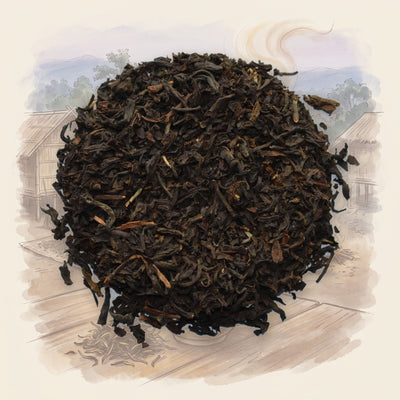
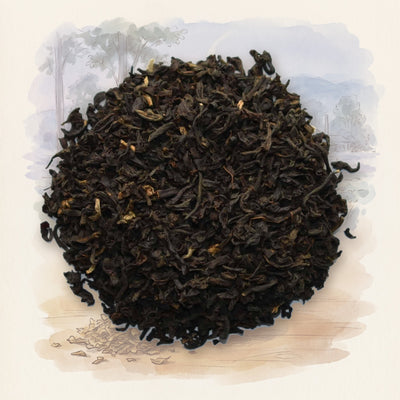
Assam Estate TGFOP carries the golden tips; Assam Estate CTC BOP is the chai engine, crushed, torn and curled as Amgoorie first did it around 1930. Borengajuli, 2nd Flush and Tarajulie Estate, 2nd Flush are the summer picking, from Udalguri and Sonitpur; Bukhial Estate is named for a Golaghat garden whose manager flew his own plane, German shepherd beside him.