Darjeeling Loose Leaf Tea
Archibald Campbell planted the first tea seeds in Darjeeling in 1841, and the cool slopes suited the Chinese plant over the Assam one. The industry counts itself commercial from 1856; by the end of 1866 there were thirty-nine gardens. Today eighty-seven gardens on about 17,500 hectares are the only ones allowed to call their tea Darjeeling, a name protected since 2004, India's first geographical indication.
The gardens were built by workers brought from Nepal and Sikkim; their descendants, Gorkha and Adivasi, still pluck them. On 25 June 1955, during a strike called by the Communist Party of India and the Akhil Bharatiya Gorkha League, hundreds of workers gathered at Margaret's Hope demanding maternity benefits, higher wages and an end to arbitrary dismissal. Police fired, and six were killed, two of them women, one a boy of fourteen watching from a tree. Twenty thousand marched on Darjeeling town the next day; by 27 June the management had met every demand.
Legend has it that Margaret, daughter of the man who ran the garden, came out from England, promised to return, and died on the voyage home; her father renamed Bara Ringtong for her. Mim, the story goes, is Mem, the British lady's garden. Sungma is said to be Tibetan for the place where mushrooms grow wild; since the 1934 earthquake took its factory, its leaf has been made at its twin Turzum.
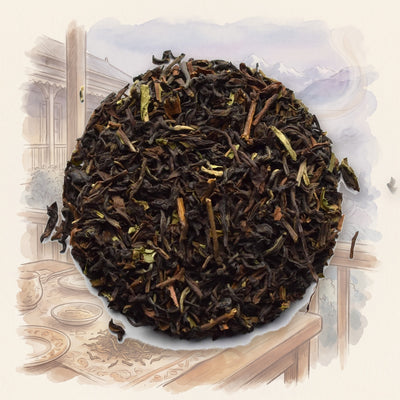
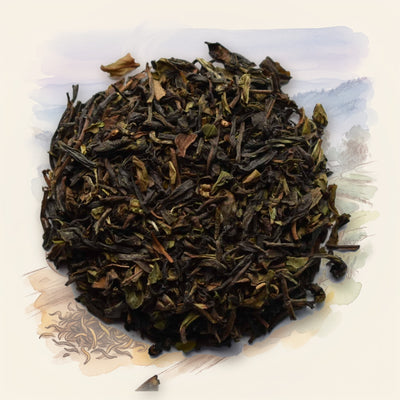
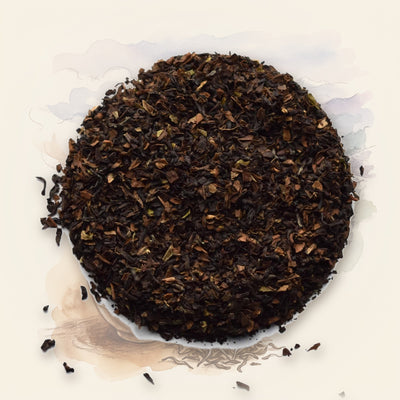
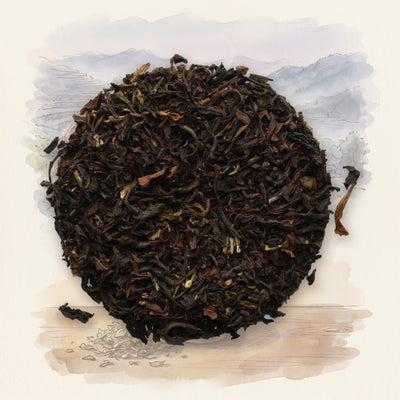
The first flush, March to May, is light and floral; the second, in May and June, brings the muscatel. Sungma Estate, 1st Flush (Darjeeling) is the spring cup. Margaret's Hope Estate, 2nd Flush (Darjeeling), Mim Estate, 2nd Flush (Darjeeling) and Risheehat Estate, 2nd Flush (Darjeeling) are the summer one.
Darjeeling Loose Leaf Tea
Results