

Ingredients · Fruit
Strawberry
Fragaria × ananassa · Rosaceae (rose family)

What it’s like, and how to use it
How to use it
In fruit infusions, hot and iced; cold brewing keeps more of the aroma. With hibiscus and rosehip for a pink, tart cup. The dried leaf steeps like a mild black tea and is used to give herbal blends body.
With food
Cream. White chocolate. Rhubarb. Basil and black pepper, both of which sharpen it. Vanilla. Balsamic. Mint. Almond.
With spices
Vanilla. Black pepper, in small amounts. Rose. Cardamom. Mint.
With tea
White tea and matcha, both of which it is paired with here. Rooibos. Green tea, iced. Hibiscus and rosehip.
Its story
Where it comes from
The garden strawberry is a hybrid, and a surprisingly recent one: it was first bred in Brittany in the 1750s, from a cross of Fragaria virginiana from eastern North America with F. chiloensis, the Chilean strawberry, which Amédée-François Frézier had brought back from Chile in 1714. So the strawberry everyone knows is a Franco-American-Chilean invention about 270 years old. No lot origin is named in our notes.
What happened
Two things about the strawberry are not what people assume. It is not a berry — botanically it is an aggregate accessory fruit, and each apparent seed on the outside is an achene, a fruit in its own right with a seed inside it. And the plant is an engineered thing: two wild species from opposite ends of the Americas, carried to Europe by a French military engineer and a series of collectors, crossed in Brittany in the 1750s. The smell that everyone recognises comes substantially from one compound, furaneol, which is also what makes a strawberry candy smell like a strawberry.
On the shelf with it
Every product it goes into.
-
Strawberry Matcha, Organic
Regular price From $9.00 CADRegular price -
Kiwi's Big Adventure
Regular price From $9.00 CADRegular price -
Tropic Thunder Matcha, Organic
Regular price From $9.00 CADRegular price -
Long Island Strawberry, Organic
Regular price From $9.00 CADRegular price -
Strawberries 'n' Cream, Organic
Regular price From $9.00 CADRegular price -
Chocolate Strawberry Matcha, Organic
Regular price From $9.00 CADRegular price -
Pineapple, Pineapple Matcha, Organic
Regular price From $9.00 CADRegular price -
 Sold out
Berry Blast
Regular price From $9.00 CADRegular price -
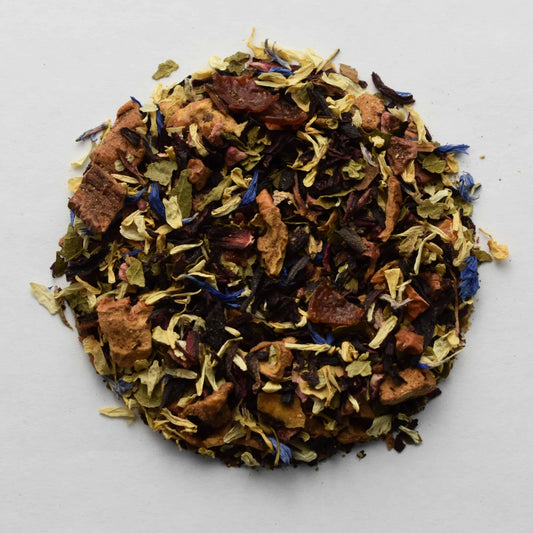 Sold out
Raspberry Lemonade, Organic
Regular price From $10.00 CADRegular price -
 Sold out
Oolong Berry Blend
Regular price From $10.00 CADRegular price


