Three small clay tablets in Yale's Babylonian Collection, written about 2000 BC and deciphered in 1985, are the oldest recipes anyone has found. The Assyriologist who read them, Jean Bottéro, said the cooks seem obsessed with every member of the onion family. Four thousand years on, the pan still starts the same way.
Egypt read something else into the bulb. The circle within a circle was taken for eternity, and onions went into the tombs with the dead. At the mummification of Ramesses IV onions were placed in his eye sockets and his ears, with onion skin in each nostril. Garlic carried its own weight of belief further north: in Central Europe it was hung in windows and rubbed on chimneys and keyholes against demons, werewolves and vampires.
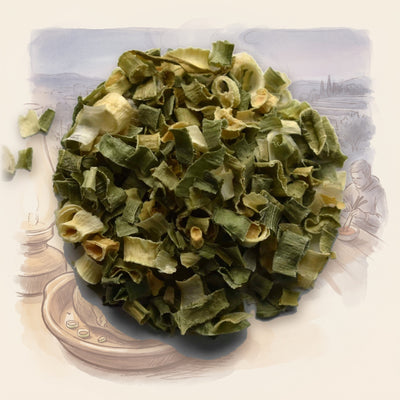
The green one here has a muddled name of its own. Welsh onion is not Welsh: the word is an old English term for foreign, the plant is Allium fistulosum and it comes from China. Wales's own green allium is the leek.
Drying turned all this into a jar, and concentrates what it leaves. Onion powder runs about ten times stronger in flavour than fresh onion, so a tablespoon of it stands in for a medium onion, and an eighth of a teaspoon of garlic powder for a clove. In 1954 an unknown Los Angeles cook stirred instant onion soup into sour cream, a local paper printed it, Lipton promoted it on television in 1955, and from 1958 the recipe was on the packet.
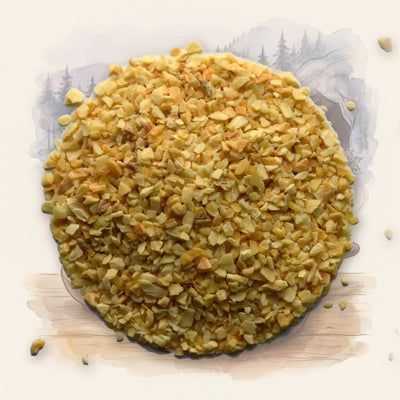
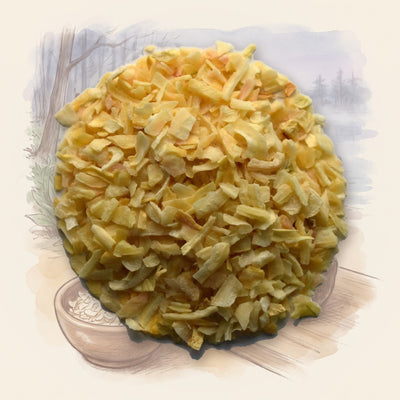
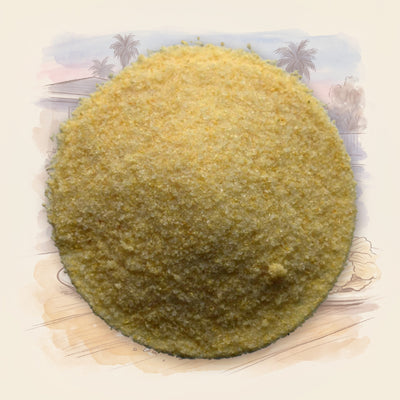
Garlic, Minced needs liquid and a little time. Garlic, Powder disappears into a dressing, and Onion, Granulated holds its grain in a rub. Green Onion goes on at the last second, over noodles or a split potato, and Onion Sea Salt is the short way to a burger.