Herbal Teas for Allergies & Sinus
Read its story →
Hans Christian Andersen published The Wild Swans on 2 October 1838. A king has eleven sons and one daughter, Elisa; the brothers are turned into swans, and the only thing that will undo it is eleven shirts woven out of stinging nettles. Elisa gathers them by her cave and off graves in a churchyard at night, crushes them to flax with blistered hands, spins, weaves, and says nothing to anybody, because speaking would break the work. Taken for a witch, she throws the shirts over the swans on the way to the fire.
Nettle really was cloth. People have spun and woven it for close to three thousand years, and a European research project has lately put textile firms in Austria, Germany and Italy back on the fibre. Cornish Yarg is a cheese wrapped in nettle leaves. Dorset has held a nettle-eating championship since 1986, when two farmers argued in a pub over whose nettles were longer and one promised to eat any that beat his.
Peppermint's second life was sugar. The story of a Cologne choirmaster handing out crook-shaped sticks in 1670 to quiet children at a Christmas service turns up everywhere and has no source older than the twentieth century. The paper trail is plainer: stick candy at a Boston exhibition in 1837; a Philadelphia recipe of 1844 for peppermint candy kept white except the stripes, pulled into long sticks and twisted; a small pine hung with candy canes at Wooster, Ohio, in 1847.
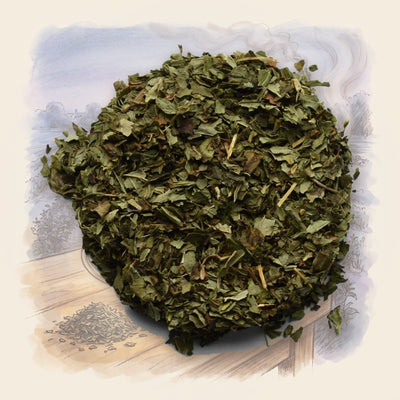
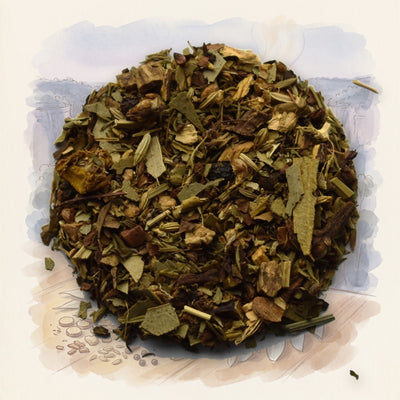
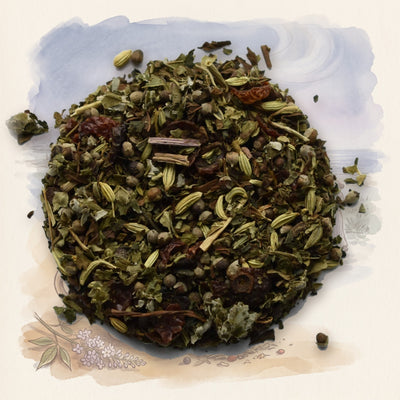
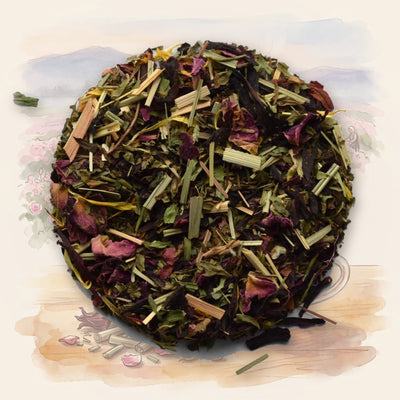
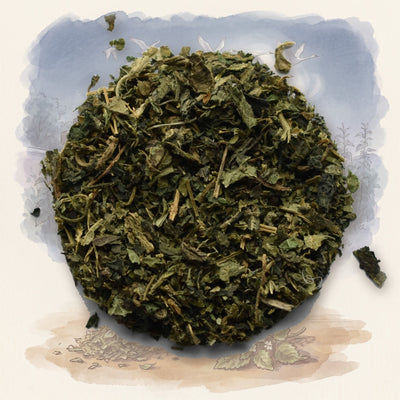
Here both are back to a leaf. Nettle, Organic is the dried leaf on its own and Peppermint, Organic is the confectioners' plant without the sugar. Ayurvedic Breathe Deep runs to thirteen plants, eucalyptus and mullein flowers and thyme among them, and Ayurvedic Pitta Balance, Organic is the one with red clover and calendula in it. Put a lid on the pot; the oils that carry the smell go off with the steam.
Results