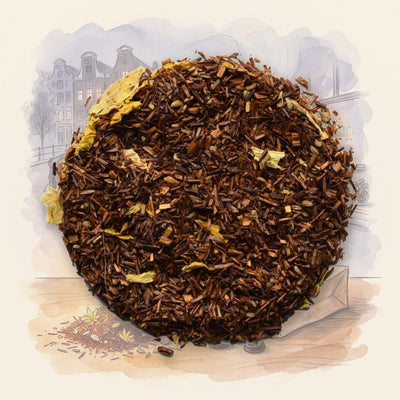
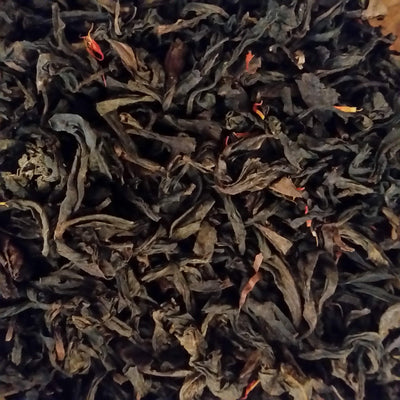
Pontefract, in Yorkshire, grew licorice in residential plots called garths from at least the 1500s, and monks may have grown it there as early as the 1200s. Glycyrrhiza is Greek for sweet root, and glycyrrhizin makes the root many times sweeter than sugar. An apothecary named George Dunhill sweetened his medicine with it, and the Pontefract cake followed, stamped with the seal of Pontefract Castle. In the Netherlands the same root is drop, made up with mint, aniseed or salmiak, which is ammonium chloride.
Icewine starts with a bad winter. Wine pressed from frozen grapes is indicated in Roman times, in Pliny. Canada's began by accident: in 1972 Walter Hainle, a German immigrant in the Okanagan Valley, made forty litres after an early and unexpected frost, and first sold the wine in 1978. The rules now ask that the grapes freeze on the vine and reach thirty-five degrees Brix before they are pressed.
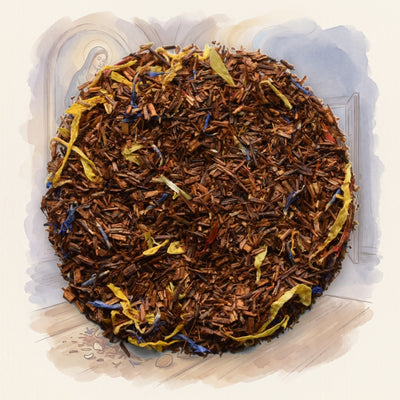
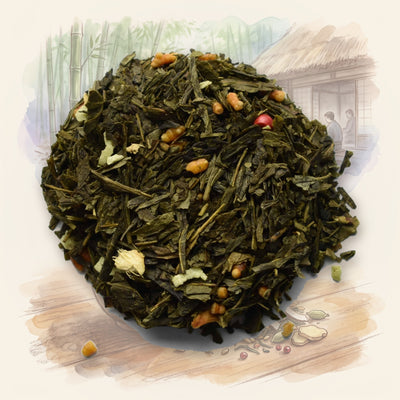
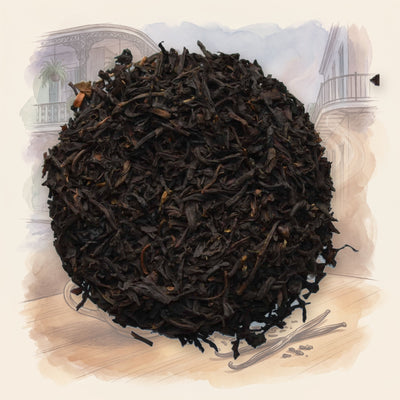
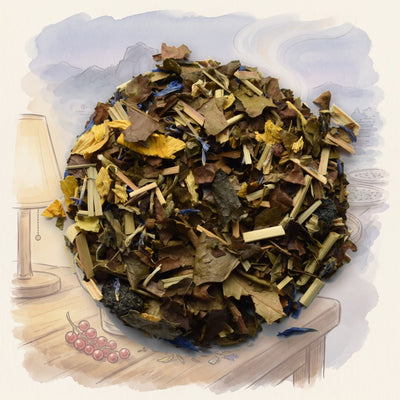
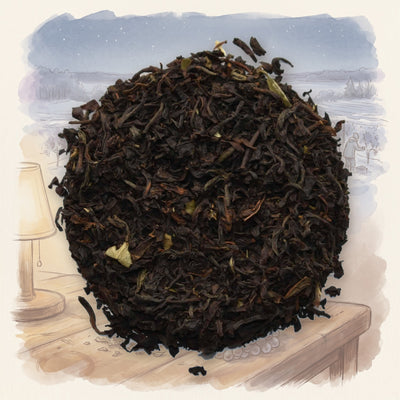
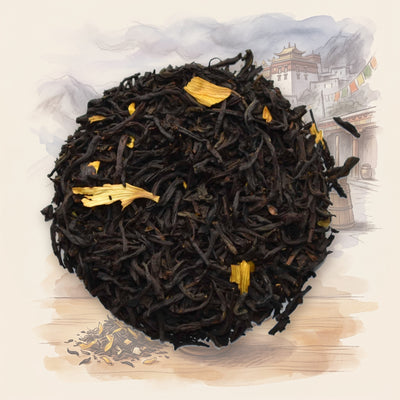
Two names here are moods rather than places. Champagne White holds no champagne: white tea with black and red currants, balm leaves, lemongrass and cornflowers, named for a toast. Bamboo Shoots holds no bamboo, being a green tea and a Japanese genmaicha with papaya, coconut, pineapple, cardamom, ginger and red peppercorns. Tibetan Monk's Blend is a Ceylon black with sunflower blossoms and vanilla, named for the plateau rather than made on it.
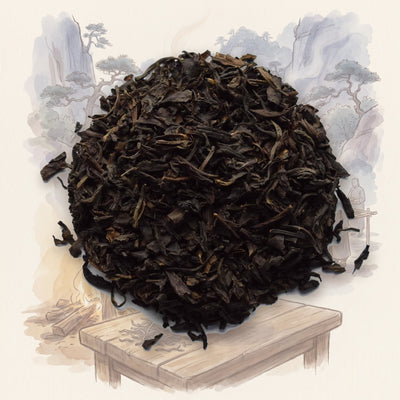
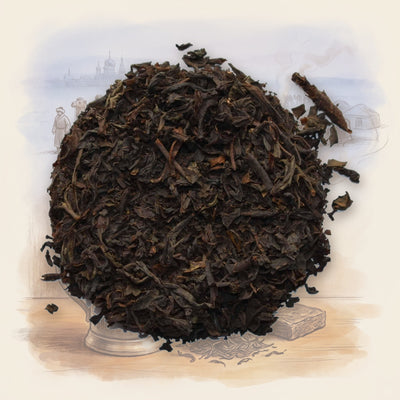
The smoked ones are the opposite, because there the name is the method. Lapsang Souchong, Organic is Fujian leaf finished over pinewood fires; Russian Caravan, Organic is smoked Ceylon named for the camel road that ended at Kyakhta on the Mongolian border; Smoked Maple Oolong, Organic is the same trick with syrup in it. Beside them, Double Dutch Licorice is the sweet shop and Icewine the celebration pour.