

Ingredients · Fruit
Lemon Peel
Citrus x limon · Rutaceae (citrus family)

What it’s like, and how to use it
How to use it
In lemon pepper, on chicken and fish. In dry rubs and seasoning blends, where fresh zest would clump. In baking — muffins, scones, shortbread, a lemon loaf — bloomed in the wet ingredients first. In a tea blend. In a seafood marinade or risotto. A pinch will lift a dish that tastes flat but is already salted enough.
With food
Fish and chicken. Butter and cream. Black pepper. Blueberry and raspberry. Poppy seed. Olive oil. Asparagus and artichoke. Honey and ginger.
With spices
Black pepper, for lemon pepper. Dill. Thyme and rosemary. Sumac. Coriander seed. Ginger.
With tea
Earl Grey, whose bergamot is practically family. Darjeeling. Green tea. Chamomile and lemon balm.
Its story
Where it comes from
The lemon's origin is not settled — northwestern or northeastern India in the first millennium BC are both proposed. It was growing in Iraq and Egypt by 700 AD, in Sicily before 1000, and Arab growers spread it through the Mediterranean between 1000 and 1150. Large-scale European growing began around Genoa in the fifteenth century; Columbus carried lemon seeds to Hispaniola in 1493. Shop notes name no lot origin.
What happened
The lemon's word travelled with the fruit: English lemon from Old French limon, Italian limone, Arabic laymun, and further back through Persian and Sanskrit. Its most consequential chapter is naval. Sailors on long voyages died of scurvy — Vasco da Gama lost 116 of 170 men in 1499. James Lancaster gave one of his four crews regular lemon juice in 1601. In 1747, aboard HMS Salisbury, the naval surgeon James Lind took twelve scorbutic sailors, divided them into six pairs and gave each pair a different treatment; oranges and lemons were the most effectual remedies. In 1795 the Admiralty made lemon juice and sugar a daily ration, and British sailors became limeys — though for a long time what they drank was Mediterranean lemon, not lime. There is a darker consequence. Economists have argued that the Sicilian Mafia first appeared in exactly the citrus country around Palermo where that new overseas demand made high profits, in a place with weak rule of law, standing between growers and exporters — one doctor who tried to sack his warden had his replacement shot dead, fled to Naples, and wrote to Rome that of eight hundred people in his district there had been twenty-three killings in 1874 alone.
On the shelf with it
Sold on its own, and in these blends.
-
 Sold out
Lemon Peel, Granule
Regular price From $6.99 CADRegular price -
Pepper, Lemon, Ground
Regular price From $9.99 CADRegular price -
The Hangover, Organic
Regular price From $9.00 CADRegular price -
-
Mediterranean Spice Blend
Regular price From $9.99 CADRegular price -
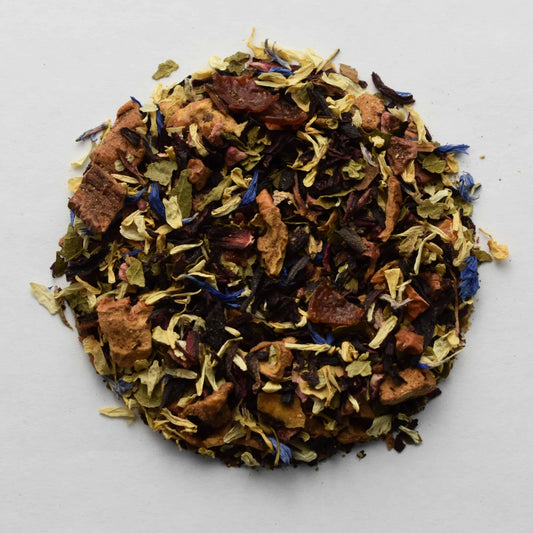 Sold out
Raspberry Lemonade, Organic
Regular price From $10.00 CADRegular price -
 Sold out
Lemon Dill Sea Salt
Regular price From $9.99 CADRegular price -
 Sold out
Tandoori Masala
Regular price From $9.99 CADRegular price -
-
 Sold out
Argentinian Chimichurri Blend
Regular price From $9.99 CADRegular price


