In 1280, by the usual telling, Marco Polo found in China a vegetable with all the properties of saffron that was not saffron. What his book says of the kingdom of Fuju is thinner than that: a kind of fruit resembling saffron, which serves the purpose of saffron just as well. His Victorian editor, Henry Yule, read the passage and said it did not suggest the root turmeric at all, guessing a gardenia; his co-editor offered safflower instead. The argument has never been settled.
The plant's own centre is Erode, in Tamil Nadu, called the largest producer of turmeric in the world. India grows nearly all the crop and eats about four fifths of what it grows. The English name is stranger than the plant: in print from the 1530s as tarmaret, it is akin to the medieval Latin terra merita, merited earth, which nobody has explained. The root moved early, reaching China by about 700, East Africa by 800, West Africa by 1200 and Jamaica in the eighteenth century.
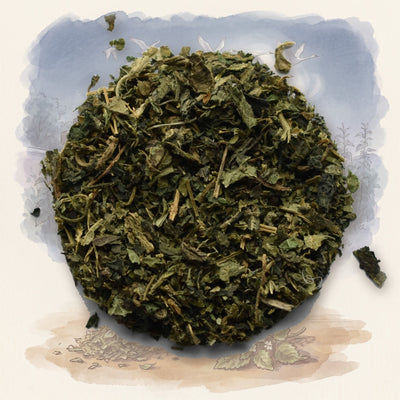
Nettle is the plant on this shelf people already know by touch. In Cornwall it wraps a cheese, Cornish Yarg, in leaves laid on by hand. Dorset holds a yearly contest for eating the raw stalks, which began in a pub argument in 1986 between two farmers over whose nettles were longer. In Tibet the story goes that the yogi Milarepa lived on nettle soup in his cave until his skin turned green.
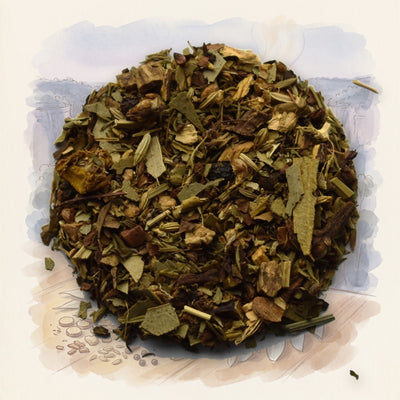
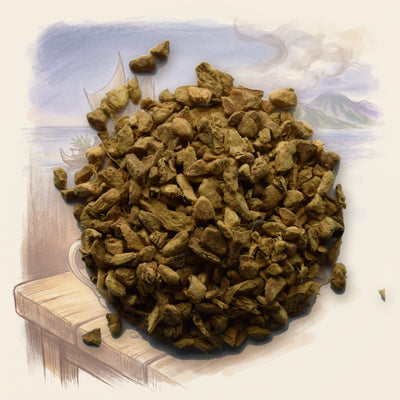
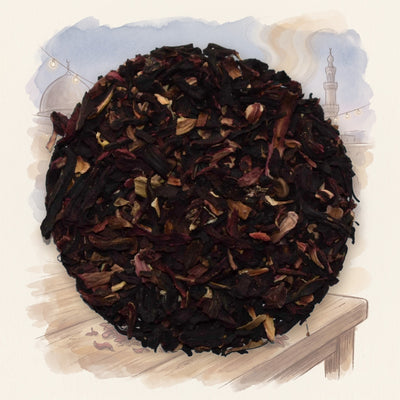
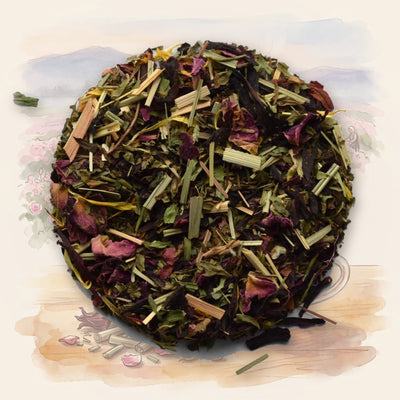
Turmeric Sunshine, Organic is the golden cup on its own, naturally caffeine-free. Ginger Root, Organic is the dried root, mellower and more peppery than the fresh. Bengal Tiger Spice sets ginger, cinnamon, cardamom, cloves and black peppercorns on rooibos, so it carries no caffeine either. Ayurvedic Pitta Balance, Organic leaves the spice out: hibiscus, peppermint and rose. Nettle, Organic is grassy and green, Burdock Root, Organic nearer a parsnip.