Ingredients · Spice
Bell Pepper
Capsicum annuum · Solanaceae (nightshade family)

What it’s like, and how to use it
How to use it
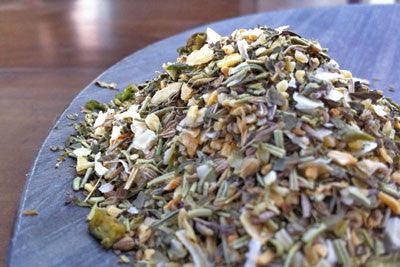
Rehydrates in any wet dish — rice, soup, stew, omelette, pasta sauce. In seasoning blends it is doing colour and sweetness. It will not add heat, so it can be used with a free hand. In the Balkans, whole sweet peppers are roasted and peeled by the family in mid-autumn and made into ajvar for the winter jars.
With food
Onion and tomato. Rice and couscous. Eggs. Sausage and chorizo. Chicken. Olive oil. Paprika. Cheese.
With spices
Paprika, which is its dried and ground close relative. Garlic and onion. Oregano and basil. Cumin. Black pepper. Chile, where heat is wanted.
With tea
Not a tea ingredient.
Its story
Where it comes from
Peppers are native to Mexico, Central America, the Caribbean and northern South America, and are among the oldest domesticated crops; Capsicum annuum was most likely domesticated in central-east Mexico. Modern bell-pepper production is led by Vietnam, India and Brazil. No lot origin is named in our notes.
What happened
Columbus came looking for black pepper and called what he found pepper anyway. His journal for 15 January 1493 records that there is also plenty of aji, which is their pepper, which is more valuable than pepper, and all the people eat nothing else — the aji being the Taino people's. Told plainly: on his second voyage he began demanding tribute from the Taino of Hispaniola, and the forced labour that followed drove their depopulation. Diego Alvarez Chanca, the physician on that voyage, wrote a letter to the council of Seville in 1494 that is called the first document describing the flora, fauna and peoples of the Americas, and described the peppers in it. From there the seeds went to Spain, most likely to the monks of Guadalupe and on to the Hieronymites of Yuste, and eventually to Szeged in Hungary, where in the autumn of 1932 Albert Szent-Gyorgyi found paprika a rich enough source of vitamin C to isolate it — work that took the Nobel Prize in 1937.
On the shelf with it
Sold on its own, and in these blends.
-
 Sold out
Red Bell Pepper Flakes
Regular price From $5.99 CADRegular price -
Pizza Spice Blend
Regular price From $9.99 CADRegular price -
Mediterranean Spice Blend
Regular price From $9.99 CADRegular price -
Greek Seasoning
Regular price From $9.99 CADRegular price -
Chicken Rub Blend
Regular price From $10.99 CADRegular price -
Sriracha Sea Salt
Regular price From $10.99 CADRegular price -
-
-
 Sold out
Argentinian Chimichurri Blend
Regular price From $9.99 CADRegular price