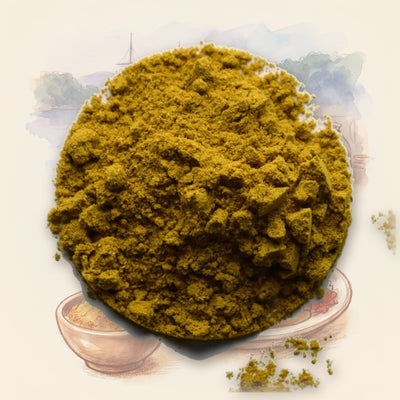
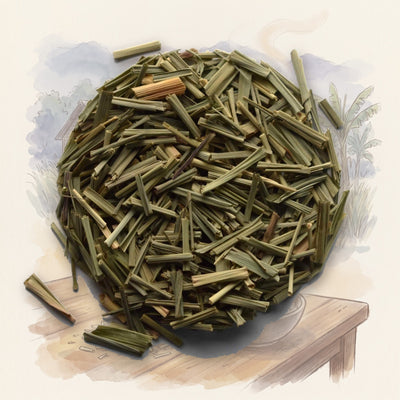
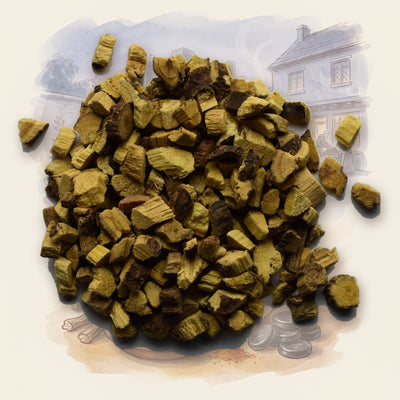
A medicine shop counter in southern China, a wall of small drawers behind it, and a cook waiting while the shopkeeper makes up five spice from the single jars, the way he would fill a prescription. The name counts a balance rather than a number: five elements, wood and fire, earth, metal and water, set against five flavours, sweet and bitter, sour, salty and pungent.
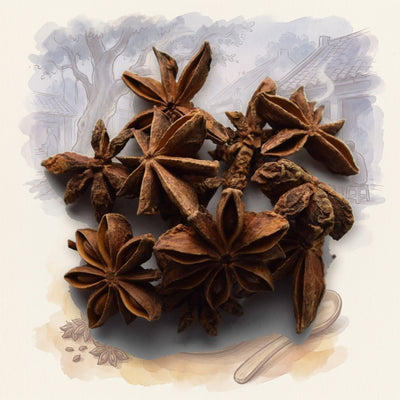
Its star grows in the hills of south-eastern China and northern Vietnam, used there for something like three thousand years. Badian, the old European name, may come from the Chinese bājiǎo, eight horns. Europe's first star anise is credited to Thomas Cavendish, an English privateer who took a Manila galleon in November 1587 and came into Plymouth the following September with her silks and spices.
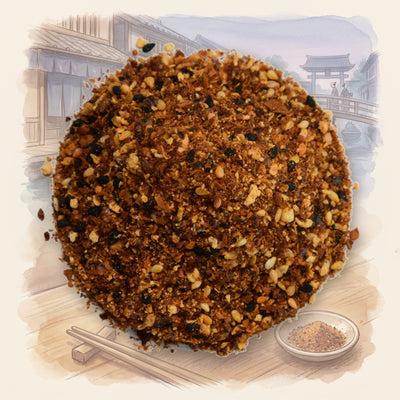
Sichuan pepper is older than all of it. Linguistic, textual and archaeobotanical evidence puts its earliest attested use in western Sichuan in the mid-fourth millennium BCE, and the buzz it leaves on the lip has been measured at around fifty hertz. The chile is the newcomer. Portuguese traders carried it to Japan in 1542, and a Korean encyclopedia of 1614 records it arriving from there under a name meaning Japanese mustard. In Edo, in 1625, a spice merchant on a canal named after a medicine grinder mixed chile with six other things and sold it at temple gates.
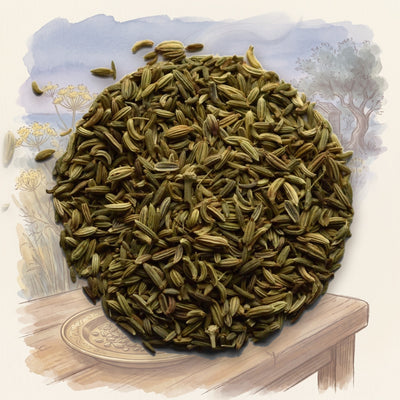
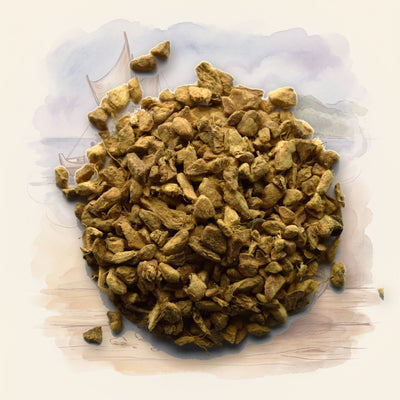
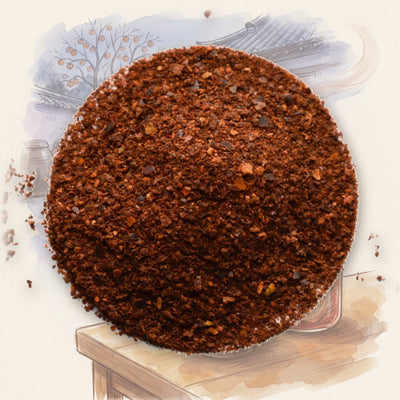
Chinese Five Spice here is built on anise seed rather than the Sichuan pepper of the textbook formula, and Peppercorns, Szechuan sit beside it for anyone who wants the tingle back. Star Anise, Whole goes into the braise and comes out again. Gochugaru (Korean Chile Flakes) is the coarse flake dried in the sun, warm and fruity instead of sharp. Shichimi Togarashi (Seven Spice) is the shaker on a noodle shop table, and Japanese Yellow Curry Powder is the pot the navy thickened with flour so it would not spill on deck.