Floral Loose Leaf Tea
Read its story →
Provins, in Champagne, built a trade on a dried flower. The rose there is Rosa gallica officinalis, the apothecary's rose, and officinalis means of the shop. The town sold dried petals and rose conserves at the great fairs of Champagne and Brie, and from there they went across France and as far as the East. The story goes that a crusader poet, Thibaut of Champagne, carried the rose home in his helmet in 1240, and that the apothecaries planted it outside their doors as a sign.
In 1258 Saadi of Shiraz finished a book he called the Gulistan, the rose garden. Its preface tells of a friend filling his skirt with roses to carry home. Saadi says they will be gone in five or six days, and writes a garden of words instead, one that will not wilt. A cup of dried petals is the same trick. June, kept.
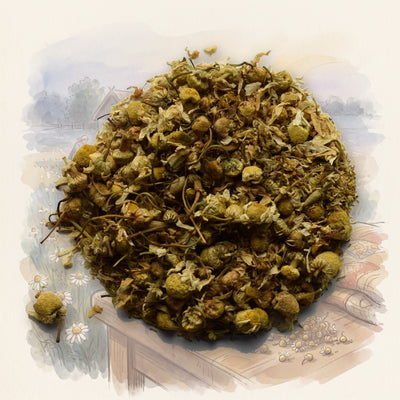
The other flowers keep their own calendars. On the Valensole plateau in Provence the lavender rows come into flower in the middle of June and stand at their best in early July; the plant became a crop there because the perfumers at Grasse wanted it, and the boom of the early twentieth century was called blue gold. Chamomile's name is Greek, chamaimelon, earth-apple, for the way the low flowers smell.
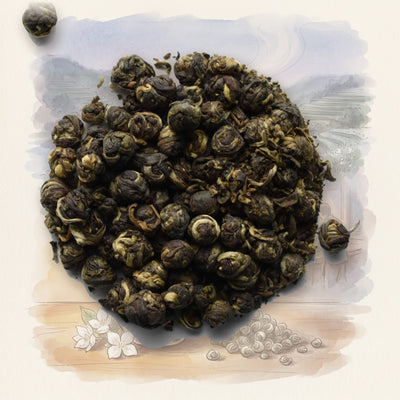
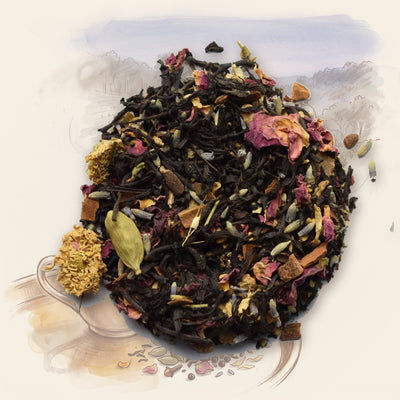
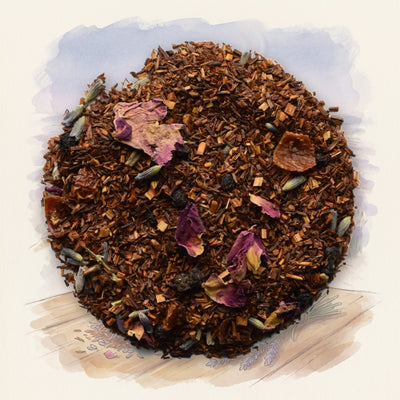
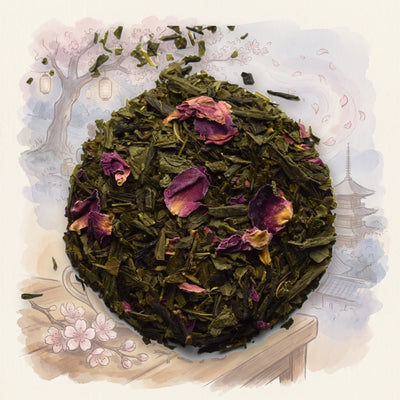
Congou Rose is petals on black tea and Rose Petals, Organic is the flower on its own. Jasmine Dragon Pearls, Organic and Silk Dragon Jasmine, Organic are the two scented greens, one rolled into beads that open in the glass and one loose. Sakura Cherry Blossom, Organic is the spring cup and Provence, Organic is that plateau in a rooibos. Chamomile, Organic and Lavender, Organic go in with no tea leaf at all.
Results