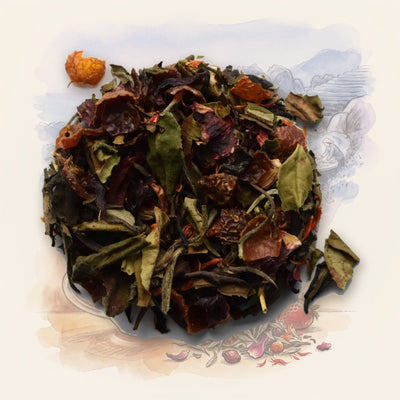
Fruit-Flavoured Loose Leaf Tea
Read its story →
Kuahuqiao, on the coast near Hangzhou. The peach was domesticated in Zhejiang as early as 6000 BCE, which puts it among the first fruits anyone farmed. It reached Greece by 300 BCE and the Romans knew it well in the first century. The botanical name is Prunus persica, the Persian plum, for a stop on the road rather than a home, and the English word carries the same error.
American growers came to it late. Commercial peach orchards only began in the nineteenth century, in Maryland, Delaware, Georgia, South Carolina and at last Virginia. The strawberry is later still, and it was made rather than found. Amédée-François Frézier brought Fragaria chiloensis back from Chile in 1714, and crossed in Brittany in the 1750s with a species from eastern North America it became the garden strawberry. It is not a berry. Each seed on the outside is an achene, a fruit with its own seed inside.
The apricot's name argues with its genetics. Prunus armeniaca points at Armenia, where the fruit is deeply woven into the culture, but the domestication was in Central Asia and China. The English word travelled the other way, through the Arabic al-barquq, the plums. Turkey now grows around 750,000 tonnes a year, a fifth of the world's crop, most of it around Malatya.
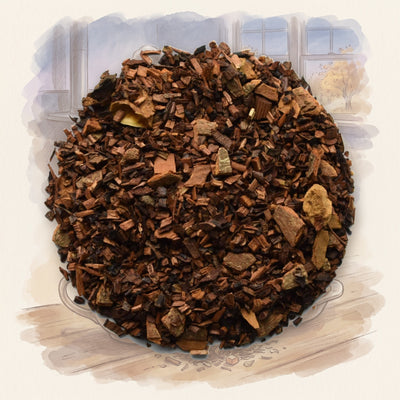
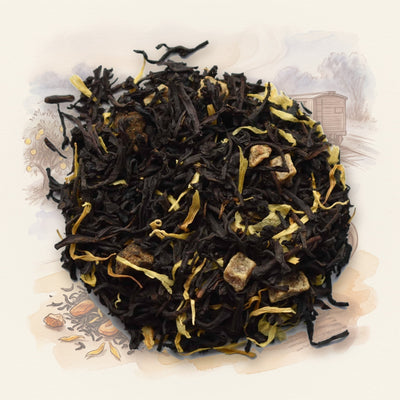
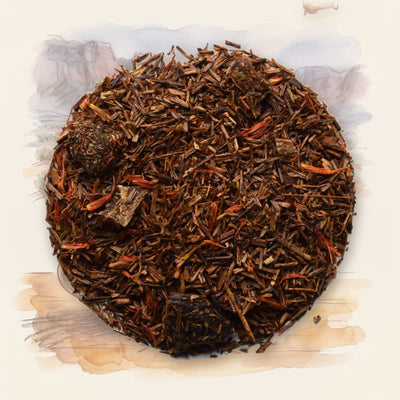
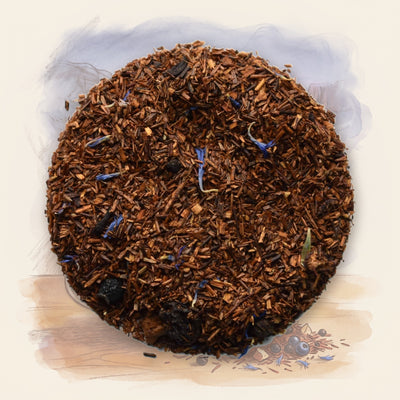
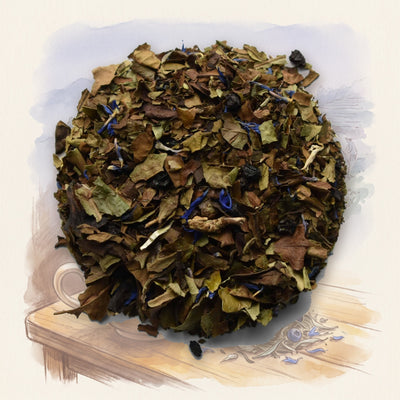
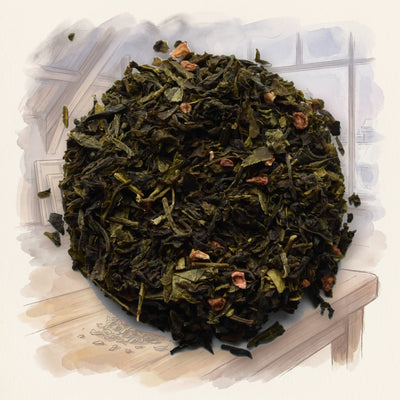
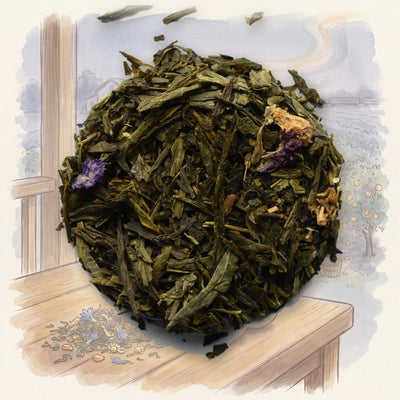
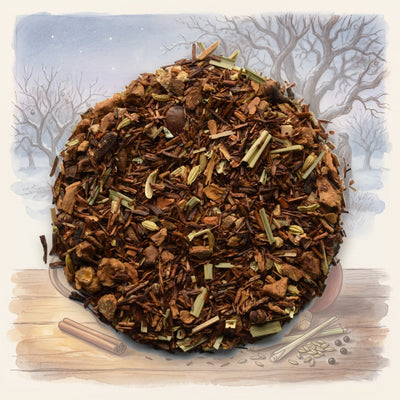
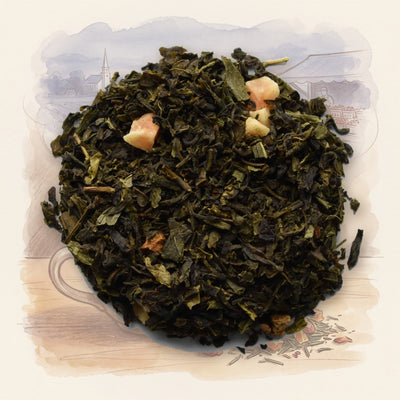
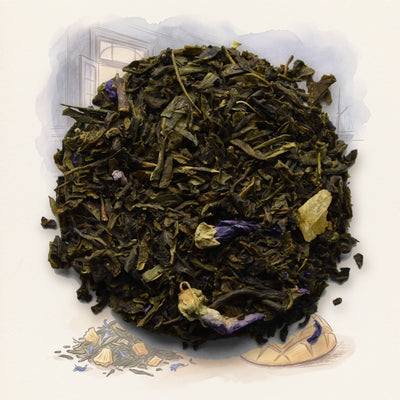
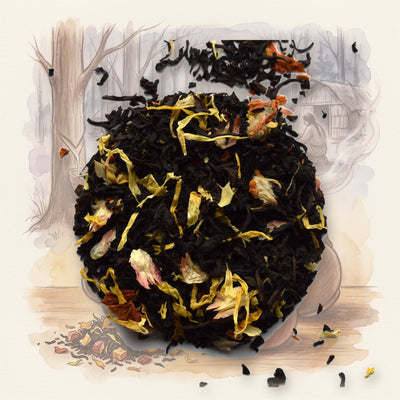
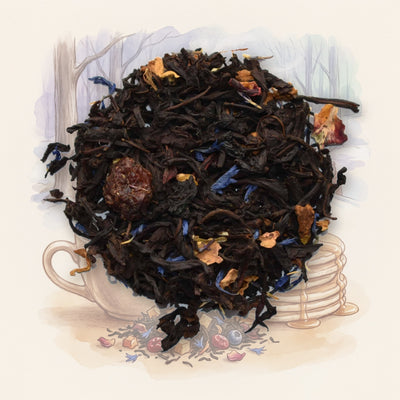
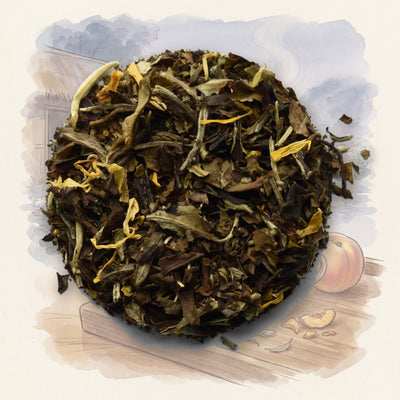
All of it here sits on tea leaf, which is what separates this shelf from the tisanes. Apricot Peach, Black is the black, Georgia Peaches, Organic and Long Island Strawberry, Organic are the greens, and Oolong Peach is the oolong. Peach White, Organic is the lightest of them. Maple Peach is the pancake breakfast, and Hot Apple Cider, Organic is the pot for a cold afternoon.
Results