Ingredients · Herb
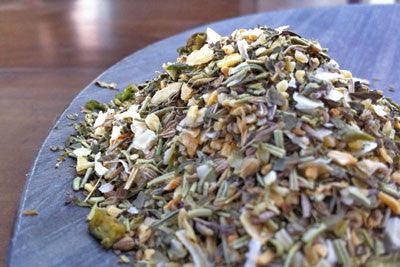
Basil
Ocimum basilicum · Lamiaceae (mint family)

What it’s like, and how to use it
How to use it
Into a tomato sauce early, where it has time to open up. In pizza sauce, marinara, minestrone and meatballs. Rub it between your fingers as it goes in. Fresh basil is the one for pesto and caprese — dried will not stand in for either. In Lisbon in June a young man gives a pot of bush basil with a paper carnation and a four-line poem, and you are not meant to sniff it: you brush it with your hand and smell your hand.
With food
Tomato above everything. Olive oil and garlic. Mozzarella and parmesan. Pine nuts. Zucchini and eggplant. White beans. Lemon. Peach and strawberry, surprisingly.
With spices
Oregano and marjoram for Italian. Garlic and chile flakes. Thyme and rosemary. Fennel seed in a sausage sauce. Black pepper.
With tea
Not a tea ingredient. Its holy cousin, tulsi, is.
Its story
Where it comes from
Native to tropical and subtropical Asia through to northern Australia, and described more loosely as native to India and other tropical regions. Genoa and Liguria grow the Genovese basil that pesto is made from; Thai basil is a different variety of the same species. Our shop notes name no origin.
What happened
The name is a daydream: through Old French and Medieval Latin from Greek basilikon, the royal plant, from basileus, king — perhaps because it went into royal perfumes. French cooks still sometimes call it l'herbe royale. In Latin the word got tangled with basiliscus, the mythical serpent, because basil was supposed to be an antidote to its venom, and the herb spent about fifteen hundred years at the centre of a genuine argument. Pliny reported that gardeners sowed it while uttering curses, rammed the earth down and prayed it would never come up — and that it grew all the better for it. He also passed on that crushed basil left under a stone would breed a scorpion. Culpeper, in the seventeenth century, was still repeating a French physician who swore an acquaintance had grown a scorpion in his brain from smelling it, and insisted that basil and rue would never grow near one another. Its saddest story is Boccaccio's: Isabella's brothers kill her lover, his ghost shows her where he lies, and she buries his head in a pot of basil and tends it until she wastes away. Keats made a poem of it in 1818, and Holman Hunt, Millais and John White Alexander all painted it.
On the shelf with it
Sold on its own, and in these blends.
-
-
Pizza Spice Blend
Regular price From $9.99 CADRegular price -
-
Vietnamese Lemongrass Rub
Regular price From $10.99 CADRegular price -
 Sold out
Italian Herb Blend
Regular price From $9.99 CADRegular price -
 Sold out
Herbes de Provence
Regular price From $9.99 CADRegular price -
 Sold out
Thai Green Curry Powder
Regular price From $9.99 CADRegular price -
 Sold out
Classic All-Seasoning, Salt-Free
Regular price From $10.99 CADRegular price -
 Sold out
Argentinian Chimichurri Blend
Regular price From $9.99 CADRegular price