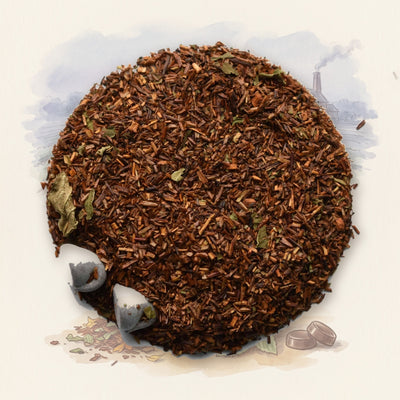
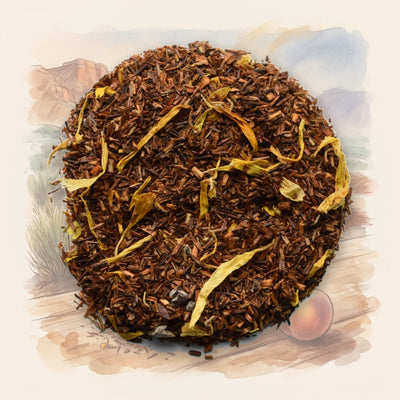
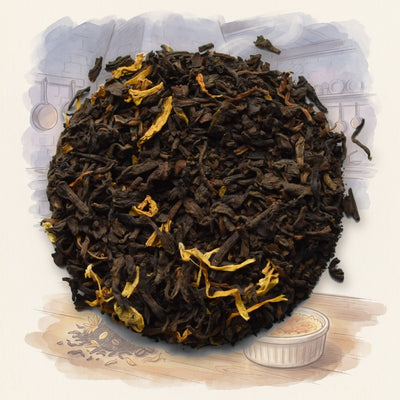
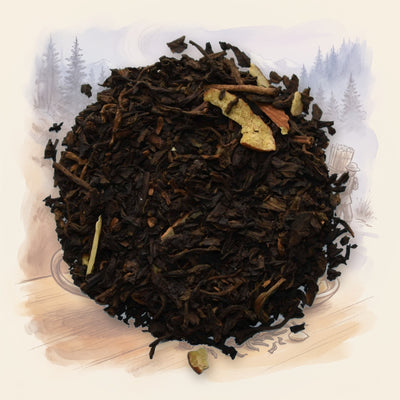
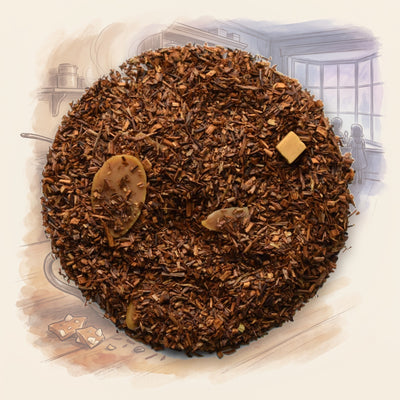
Cacao is an Amazon tree. It was domesticated at least 5,300 years ago in equatorial South America, by the Mayo-Chinchipe, and reached Mesoamerica about 3,800 years ago. The Olmec and then the Maya were drinking it along the Yucatán more than three thousand years ago. The genus is Theobroma, food of the gods. Moctezuma II, it was reported, took no other drink.
Cocoa is the same word, worn down. It is a variant of cacao, probably through a confusion with coco, and the modern habit of treating the two as different things is a convention laid over an error. The crop has moved a long way from the grove in the drawing. World production ran to 5.87 million tonnes in 2022 and Côte d'Ivoire grew 38 per cent of it. As of 2017, about 2.1 million children were working the cocoa harvest in Ghana and Côte d'Ivoire.
Caramel has no origin to give, because it is made rather than grown. Sucrose browns at 170 degrees Celsius with nothing else in the pan. That is caramelisation, and it is not the Maillard reaction, which needs amino acids to work. The colour comes from three families of polymers. The butter smell comes from diacetyl, which is why caramel tastes of butter when there is no butter in it.
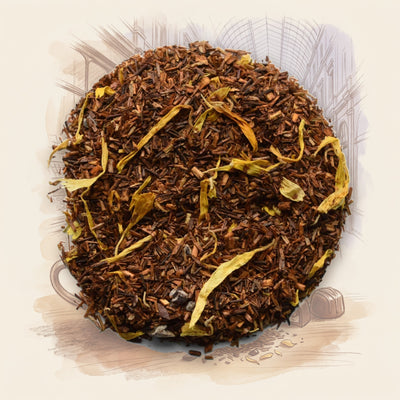
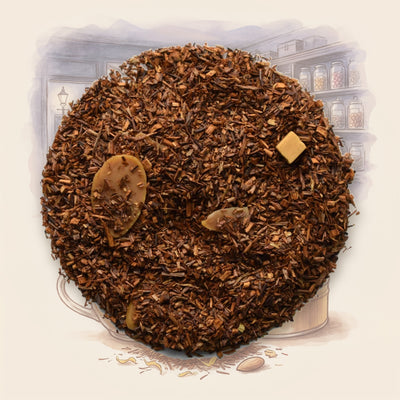
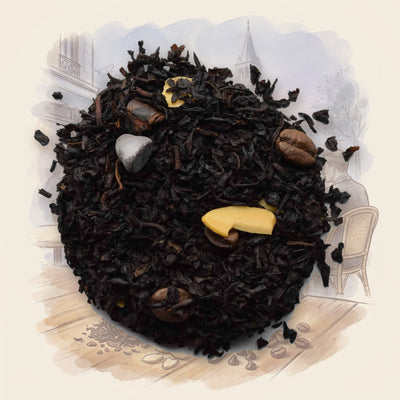
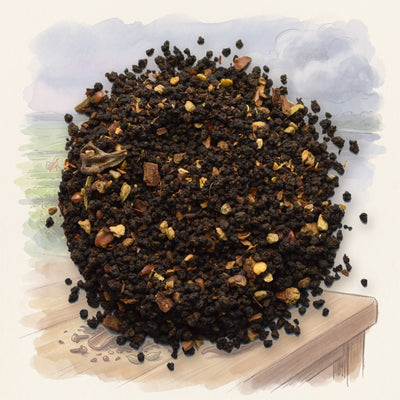
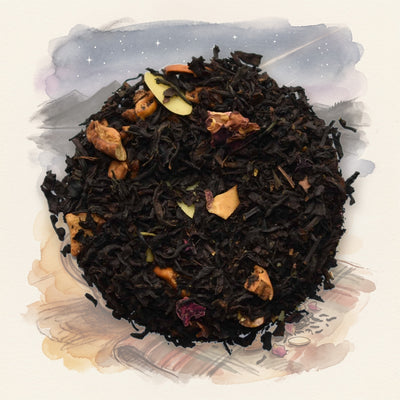
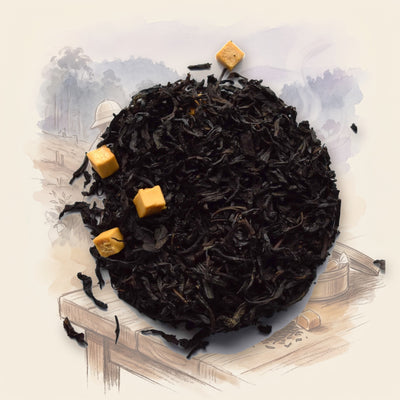
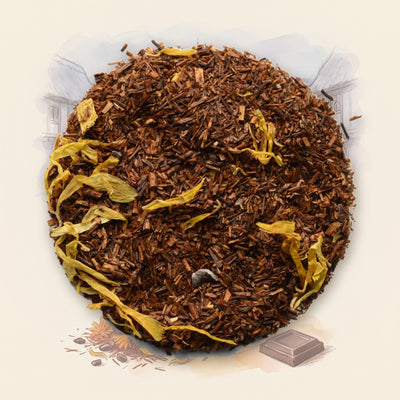
English Toffee is the steadiest cup on the shelf and Café Latte the milkiest. Chocolate Chile Chai puts chile back beside chocolate, where Mesoamerica had it first. Belgian Chocolate and Butter Toffee are built on rooibos, so they carry no caffeine and end up as the after-dinner pot. Pu-erh, Crème Brûlée is burnt sugar over fermented leaf, and Scottish Caramel, Pu-erh, Three-Year Vintage, is its butterscotch twin.