Almonds were in Tutankhamun's tomb, put there around 1325 BCE and probably carried up from the Levant. The almond is not a nut. It is a drupe, a seed in a hard shell inside a hull, a relative of the peach. Domesticating it was mostly a matter of not being poisoned: wild trees run bitter, and a bitter almond holds four to nine milligrams of hydrogen cyanide, about forty-two times the trace in a sweet one. California now grows about eighty per cent of the world's crop.
Marzipan was developed in the Middle Ages, and two towns still claim it: Lübeck on the Baltic, whose makers guarantee two-thirds almonds, and Toledo in Spain. Marzipan pigs are still a Christmas snack in Denmark, Sweden and Norway.
The walnut's name records its arrival. Wal is the old Germanic word for foreign: the foreign nut, as against the native hazel. The Persian walnut began in Iran, and China now grows about thirty-five per cent of a four-million-tonne crop. Little else grows under the tree, because the husks carry juglone at two to four per cent of their fresh weight.
Coconut is a drupe too. Portuguese sailors named it coco, head or skull, for the three germination pores. Austronesian peoples domesticated it in Island Southeast Asia and carried it on their voyages: food and fresh water in one waterproof package.
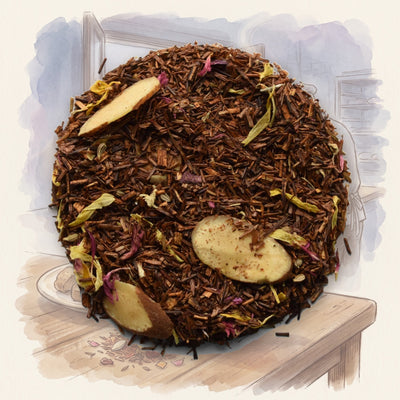
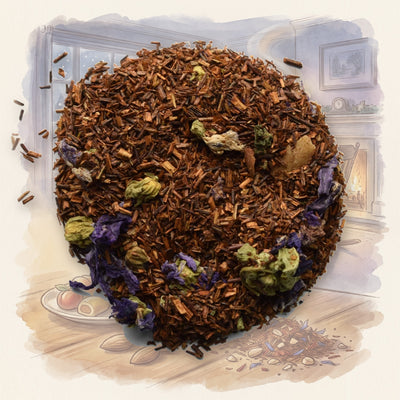
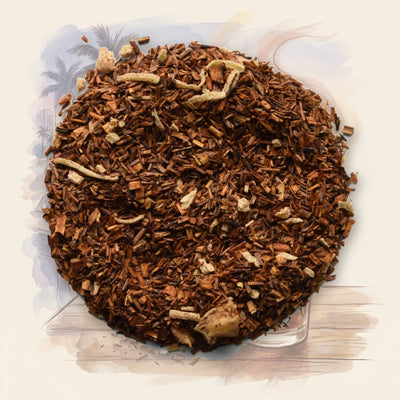
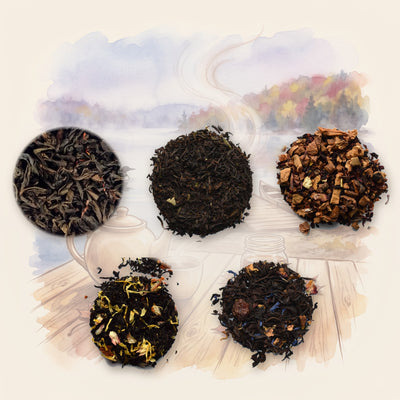
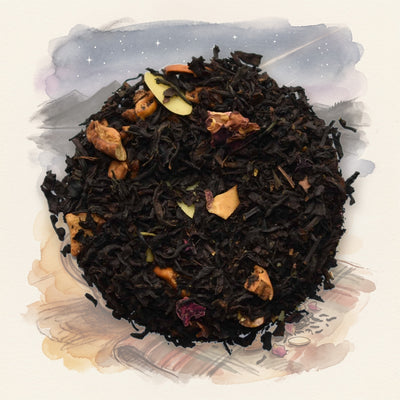
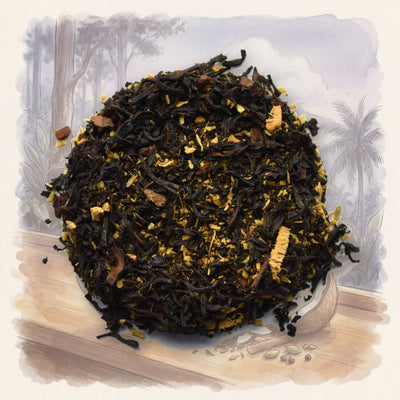
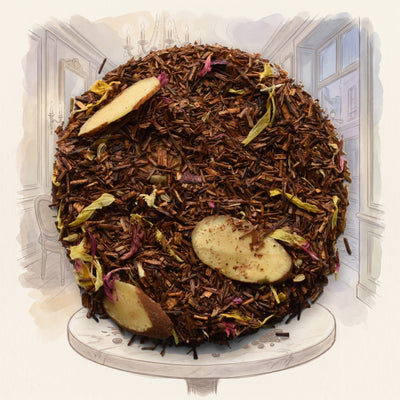
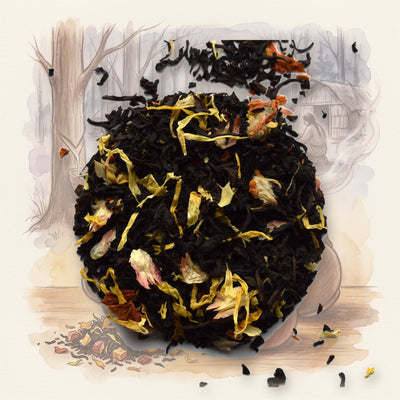
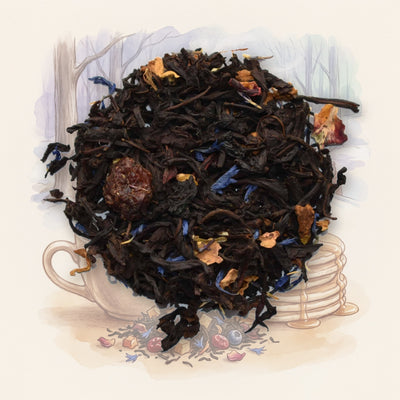
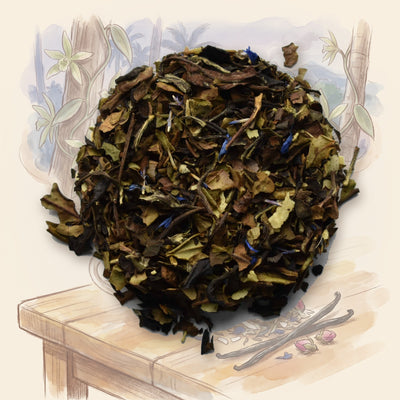
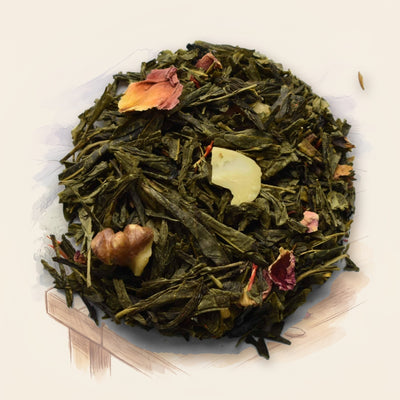
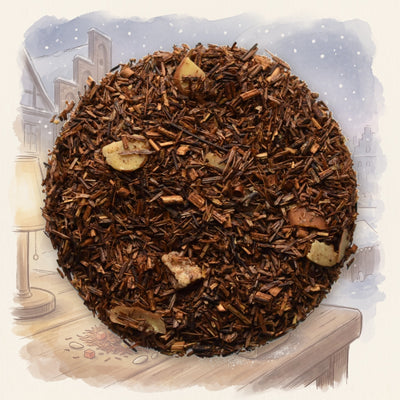
Maple is the half from this side of the water. Settlers learned tapping from the peoples of the eastern woodlands, and until the nineteenth century most of the sap was boiled to sugar rather than syrup, because West Indies cane sugar was dear. On the shelf, Smoked Maple Oolong, Organic is the wood fire and the syrup at once, Maple, Eh! Organic is the plain morning pot, Winter Marzipan sits on rooibos, Walnut Truffle puts walnuts and almonds over Japanese sencha, and Vanilla Coconut White is the one for a beach at dusk.