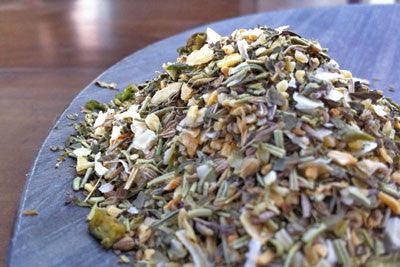
Ingredients · Herb
Oregano
Origanum vulgare; Mexican oregano is Lippia graveolens · Lamiaceae (mint family); Mexican oregano is Verbenaceae

What it’s like, and how to use it
How to use it
Mediterranean: pizza, marinara, Greek salad, lamb, roast potatoes, vinaigrette. Crumble it between your fingers as it goes in — the warmth releases the oils. Mexican: chili con carne, pozole, menudo, enchilada sauce, taco seasoning, adobo. The two are not interchangeable, though nothing terrible happens if you swap them.
With food
Tomato and olive oil. Lamb and pork. Feta and mozzarella. Eggplant and zucchini. White beans. Lemon. Corn and hominy, for the Mexican kind. Beef.
With spices
Basil, marjoram and thyme for Italian. Garlic and chile flakes. Cumin and chile for Mexican. Sumac and sesame in a Levantine direction. Black pepper.
With tea
Not a tea ingredient. Mexican oregano is brewed on its own as te de pais in Mexico.
Its story
Where it comes from
Mediterranean oregano is native to the Mediterranean region and widely naturalised across the temperate northern hemisphere. Mexican oregano is native to the southwestern United States, Mexico and Central America as far south as Nicaragua, growing wild on rocky slopes. Shop notes name no lot origins.
What happened
The name is usually read as Greek oros, mountain, and ganos, joy or brightness — joy of the mountain — though scholars dispute it and the dictionary calls it probably a loanword. Legend gives it to Aphrodite, who is said to have made it as a sign of happiness. The ancient Greeks used it in weddings and as a funerary offering. Mexican oregano has a much longer North American history than any label suggests: the Tarahumara flavoured pinole and esquiate with it and gathered it wild as a green, the Tepehuan cooked pozole with it, and the Mexican Kickapoo still cook with it. In Mexico it is also brewed as te de pais, country tea. Oregano only became an everyday North American herb after the Second World War, when American soldiers came home from southern Italy with a taste for the pizza herb; US sales rose 5,200 per cent between 1948 and 1956.
On the shelf with it
Sold on its own, and in these blends.
-
 Sold out
Oregano, Mediterranean
Regular price From $5.99 CADRegular price -
Mexican Chili Powder
Regular price From $9.99 CADRegular price -
Pizza Spice Blend
Regular price From $9.99 CADRegular price -
-
Mediterranean Spice Blend
Regular price From $9.99 CADRegular price -
Taco Seasoning
Regular price From $9.99 CADRegular price -
Chile-Lime Seasoning
Regular price From $9.99 CADRegular price -
 Sold out
Italian Herb Blend
Regular price From $9.99 CADRegular price -
 Sold out
Classic All-Seasoning, Salt-Free
Regular price From $10.99 CADRegular price -
 Sold out
Oregano, Mexican
Regular price From $5.99 CADRegular price -
 Sold out
Argentinian Chimichurri Blend
Regular price From $9.99 CADRegular price