Herbal Teas for Colds & Congestion
Read its story →
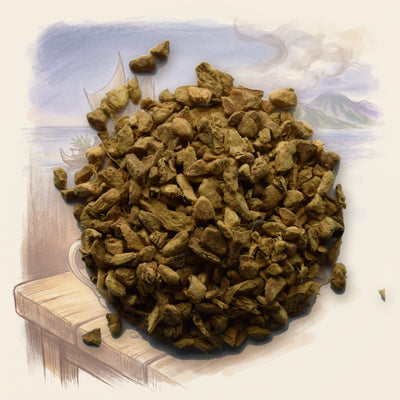
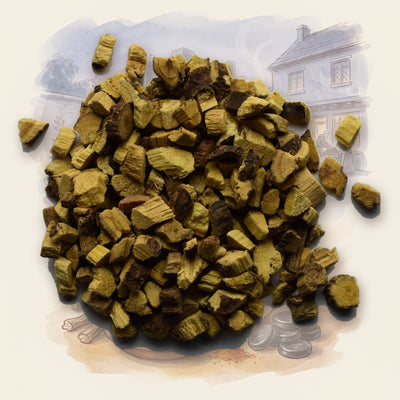
Theophrastus, writing around 300 BC, set down a sweet plant of the Scythian steppe that grew by Lake Maiotis, the Sea of Azov. He reported that the Scythians could go eleven or twelve days on it and a cheese made of mares' milk. Pliny later held that the finest came from Cilicia, in what is now south-eastern Turkey. Licorice turns up in the written record of the Assyrians, the Egyptians, the Greeks, the Arabs, the Chinese, the Tibetans and the Indians, which is a long run for one root.
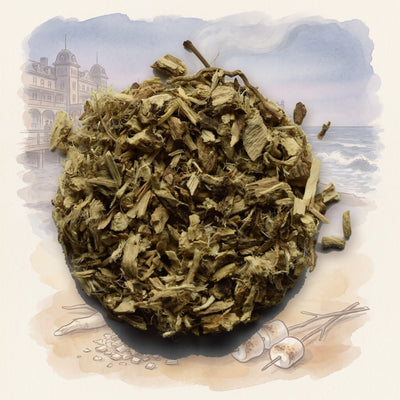
Marshmallow has a history of the same length and less of the fame. Rome ate the mallow as a vegetable and counted a dish of the marsh one a delicacy. In 1592 Prosper Alpinus, a Venetian physician and botanist working in Egypt, wrote that a plant of the mallow kind was eaten there. Maud Grieve recorded in 1931 that poorer villagers in Syria lived for weeks on wild herbs, marsh mallow among the commonest of them.
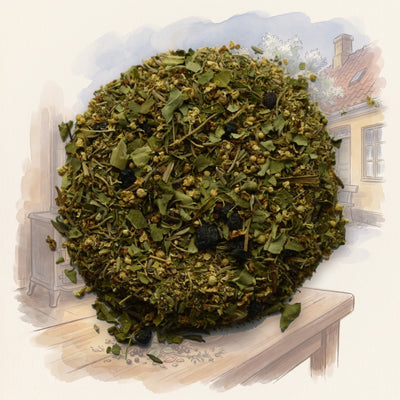
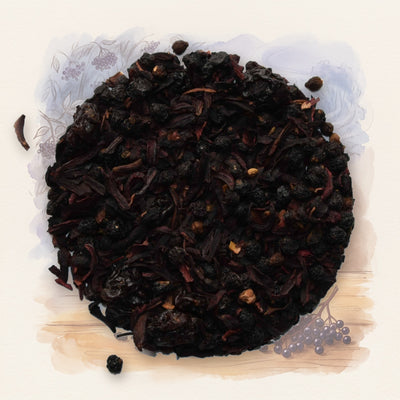
The elder outside the window is the tree of hollow wood. Sambucus comes from sambuke, an ancient stringed instrument, and the hollow twigs have been cut into flutes and into spiles for tapping maple trees; the English name is thought to come from Anglo-Saxon aeld, fire, because the stems were used as bellows. On Harris the tree was a dyehouse: berries for blue and purple, leaves for yellow and green, bark for grey and black.
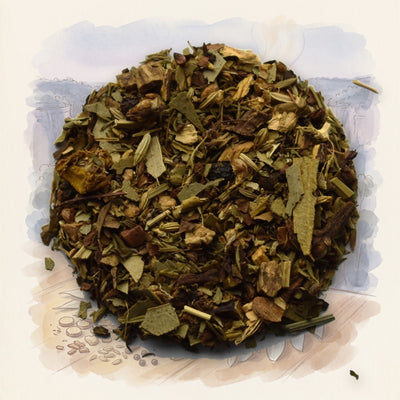
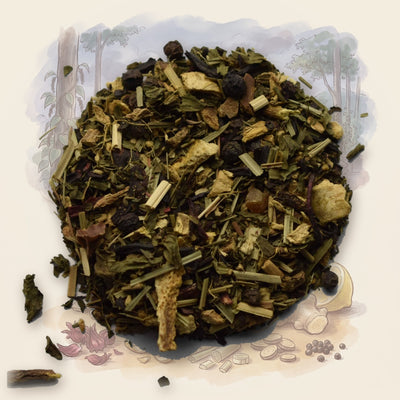
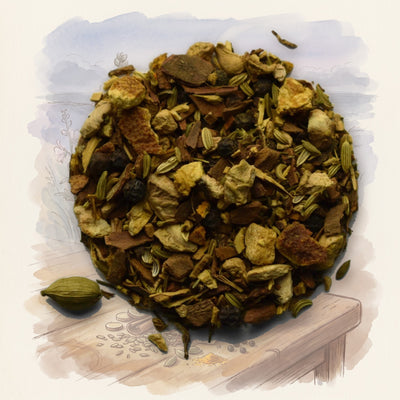
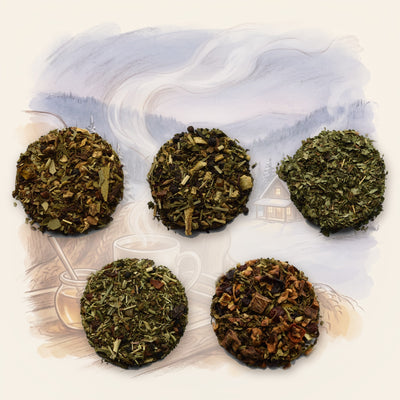
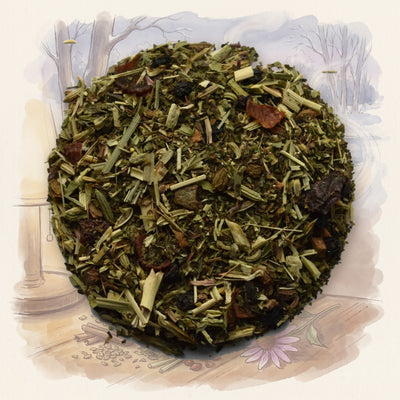
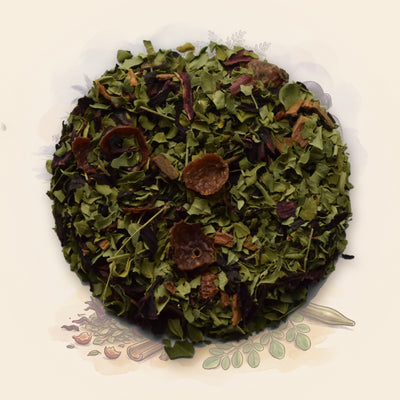
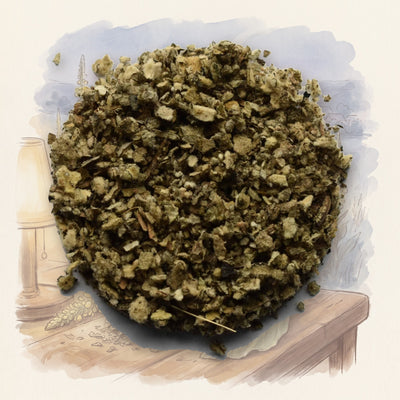
The two roots stand alone here. Licorice Root, Organic is intensely sweet and anise-like, Marshmallow Root mild and mouth-coating. Ayurvedic Throat Coat carries both, with fennel, cinnamon, orange peel, ginger, thyme and mullein, and Mullein - Organic is that last leaf by itself. Elderberry Burst, Organic is the hedgerow fruit, dark and winey. Steep any of them covered.
Results