Curry Blends
Read its story →
In Madeira, on Christmas Eve after midnight Mass, families eat carne de vinha d'alhos: pork steeped in wine and garlic. Portuguese ships carried the pot east. Afonso de Albuquerque took Goa from the Bijapur Sultanate on 25 November 1510, and from 1530 it was the capital of Portuguese India.
Goan cooks rebuilt it with what was there: no wine vinegar, so sour tamarind, or vinegar made from coconut palm toddy. Local spices went in, and the chile the same empire had carried from the Americas was growing in Goa by 1528. Vinha d'alhos became vindalho, and the potatoes people expect in it came later, from a confusion with the Hindi aloo.
The word on the other jars moved the same way. English curry is recorded from the 1590s, probably through the Portuguese caril, out of a mingling of South Indian words, kari in Tamil, Malayalam and Kannada, a spiced dish eaten with rice. A cook grinds a masala for the dish in front of her; a jar reverses that, and every blend here is a translation.
The honest ones say so. Thailand's kaeng is a wet paste pounded in a mortar, and the first printed Thai dictionary, in 1873, called it a watery dish to be eaten with rice. Minangkabau rendang goes the other way, simmered in coconut milk until the milk turns to oil and the meat fries in its own sauce. In Minangkabau thought its four parts stand for four parts of society: the meat the clan elders, the coconut milk the intellectuals, the chili the religious scholars, the spice mix the community.
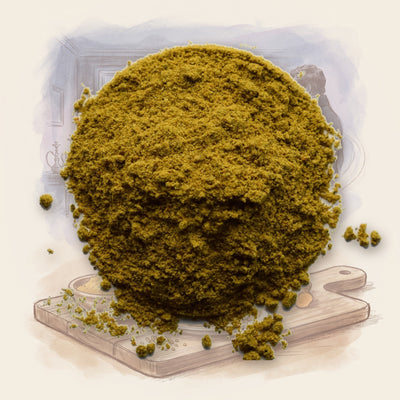
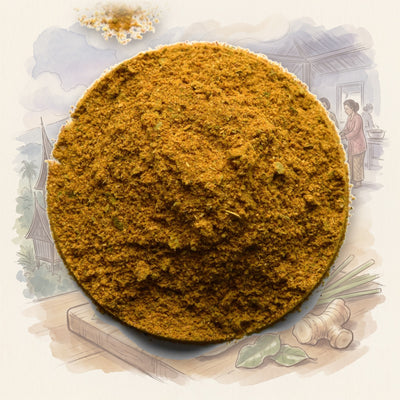
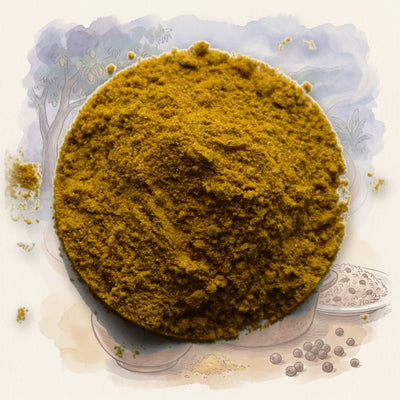
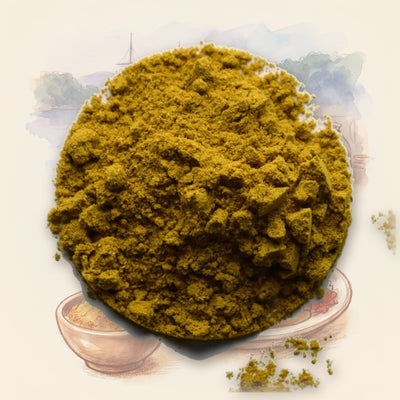
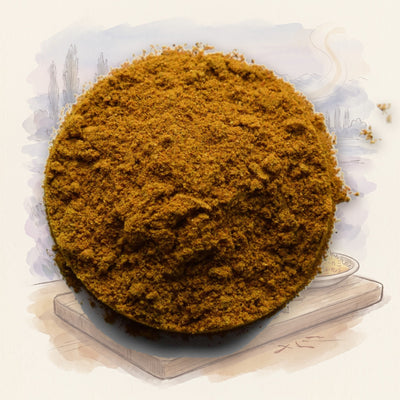
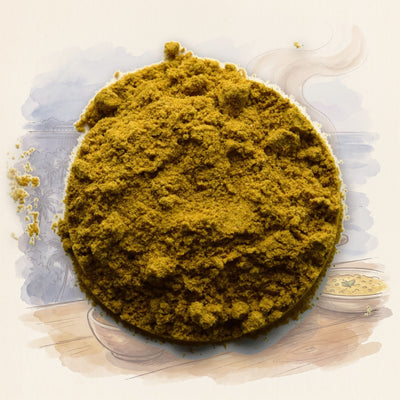
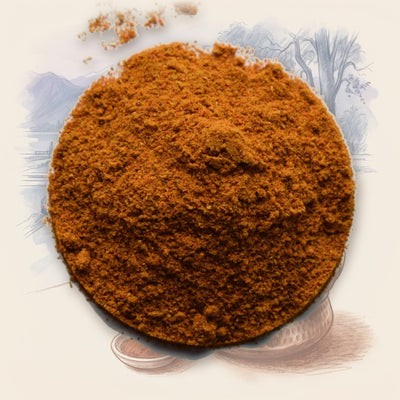
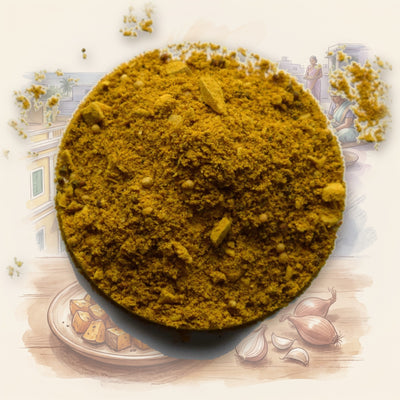
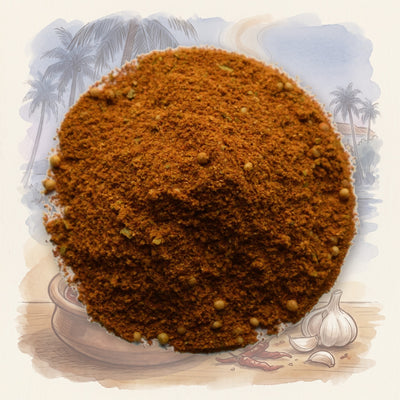
Vindaloo Curry Powder is that Goan end. Curry Powder, Mild, Organic is the plain jar, turmeric, coriander, cumin, fenugreek, mustard and black pepper, no chile in it. Thai Red Curry Powder and Indonesian Rendang Curry Powder are dry readings of wet pastes, so give them coconut milk. Garam Masala goes in at the end.
Results