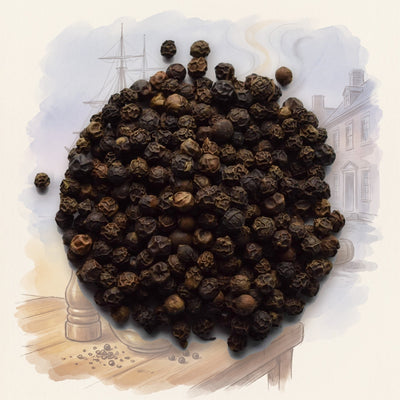
Ramesses II died in 1213 BC and went into the afterlife with black peppercorns packed into his nostrils. The vine that made them grows in South Asia. How they reached the Nile that early is not known, and that gap is this shelf in one line.
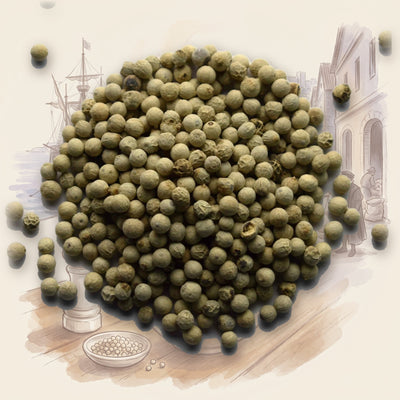
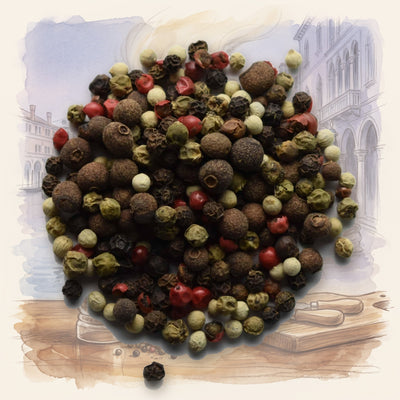
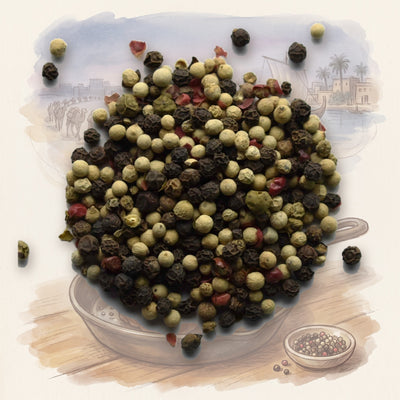
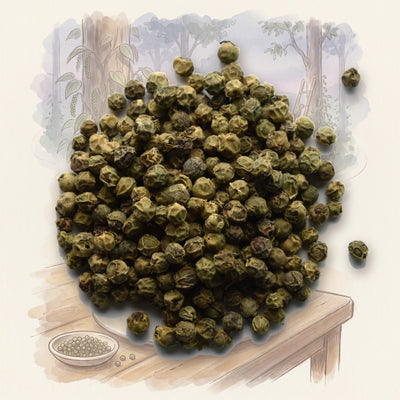
Black, white and green are one fruit handled three ways. Black is the unripe berry dried whole. White is the ripe berry left to soak about a week so the flesh rots off the seed, a process called retting, then rubbed clean and dried. Green is the same berry stopped green, in brine, in a can or by freeze-drying. Everything else here says pepper and means another plant.
Szechuan peppercorns are Zanthoxylum, a citrus relative. Linguistic, textual and archaeobotanical evidence puts their earliest attested use in western Sichuan in the middle of the fourth millennium BC, which makes them one of the oldest spices in East Asia. The buzz is hydroxy-alpha-sanshool, and people asked to describe the sensation put the tingling at about fifty hertz. The United States barred imports from 1968 to 2005 because the tree can carry citrus canker.
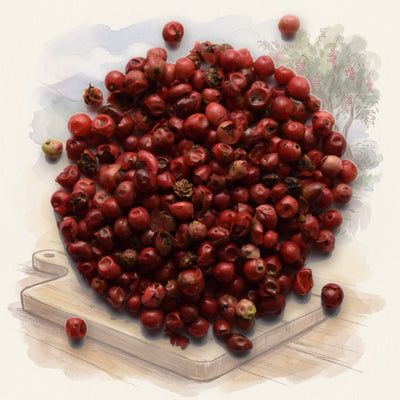
Pink peppercorns are Schinus berries from South America, no relation at all. The Wari made a fermented drink from them, and so did the Inca. Grains of paradise is the one medieval Europe reached for: a Paris household book of the early 1390s gives a spice powder that is mostly ginger, with cinnamon, sugar, cloves and grains of paradise in it. Lemon pepper is the newcomer, launched commercially at Healdsburg in California in July 1967.
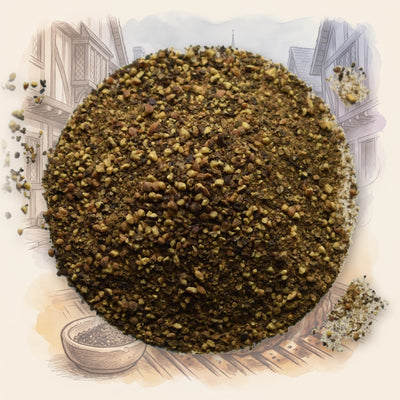
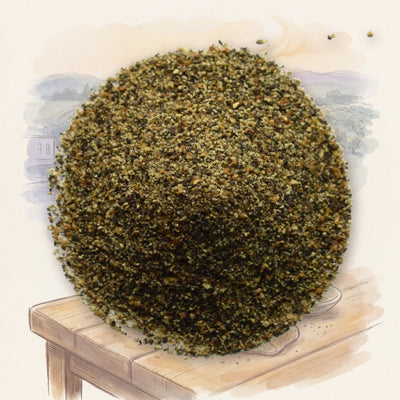
Butcher's Cracked Black Peppercorns are for pressing into a steak before it meets the pan. Peppercorns, Szechuan numb before they warm, and Peppercorns, Pink are floral and barely hot. Grains of Paradise is the medieval jar, and Pepper, Lemon, Ground is the 1967 one, citrus over the bite.