In Camargo, Chihuahua, there is an industrial park named for the chipotle. Its kilns are open-air chambers of concrete block. Red jalapeños are spread inside and turned with a shovel as they dry, the way the work has always been done. Chihuahua was Mexico's second-largest chile producer in 2007.
A jalapeño is thick-walled and wet, so smoke does what sun cannot. The peppers sit about six days at 65 to 75 degrees over pecan wood, which is a hickory, and come out at roughly six per cent moisture from about eighty-eight. Ten pounds of jalapeños make one pound of chipotles. Two kinds come off those racks. Morita is darker and red-purple, grown mainly in Chihuahua, and it is the one North America usually meets; meco is larger, grey-tan and smokier, and it is the one preferred inside Mexico. The name is Nahuatl, chīlpoctli, smoked chile.
Elsewhere the drying is sunlight. Guajillo is grown for drying in Zacatecas, San Luis Potosí, Durango and Aguascalientes; on the plant it is mirasol, the one that looks at the sun, and a smaller, hotter version is called puya. The names tangle on the way north, where California produce sheds label the fresh poblano a pasilla, when a dried poblano is an ancho and a true pasilla is a dried chilaca. Korea dries in the sun too: gochugaru is traditionally made from taeyangcho, sun-dried Korean red chiles.
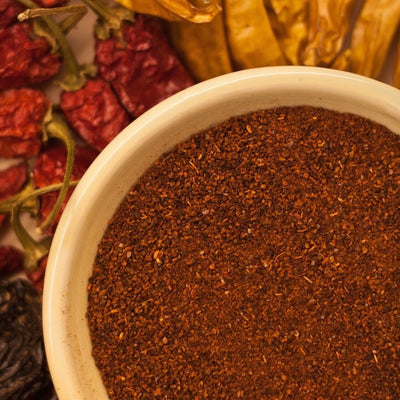
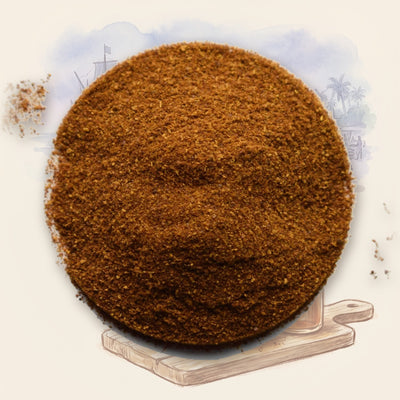
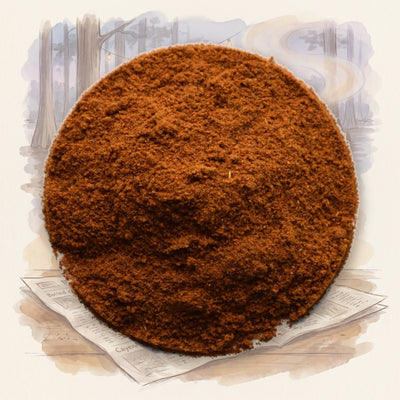
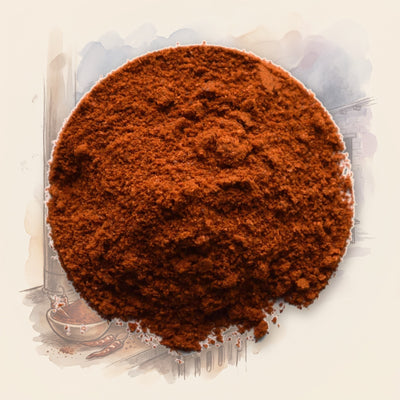
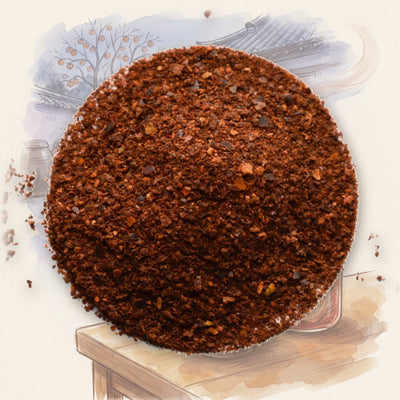
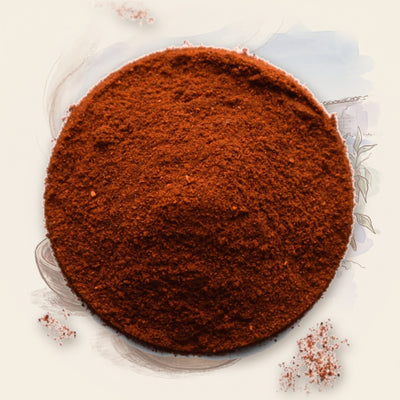
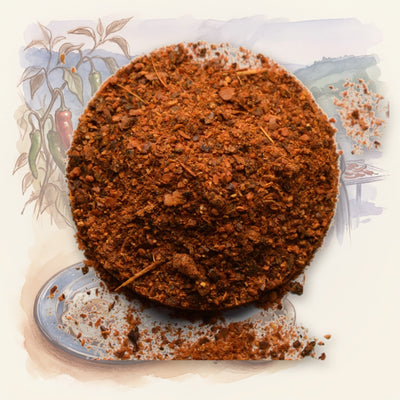
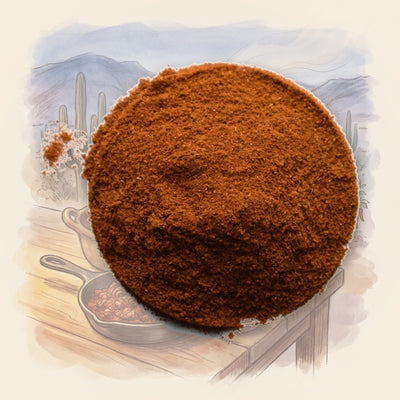
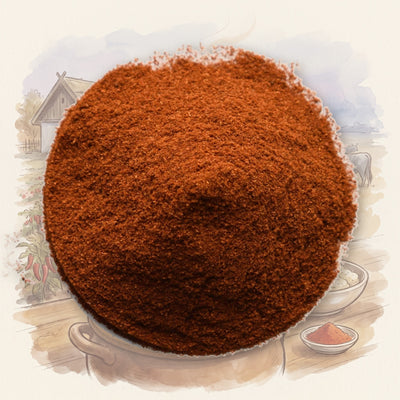
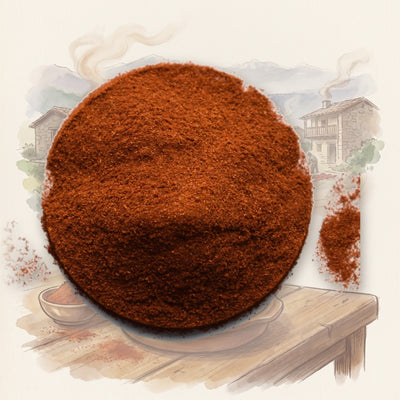
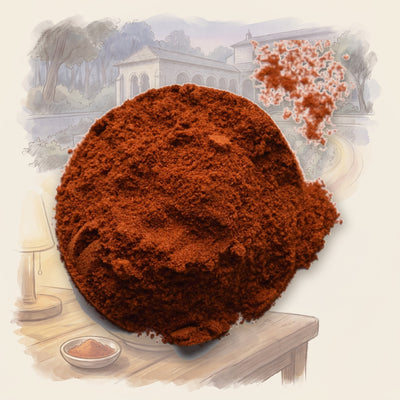
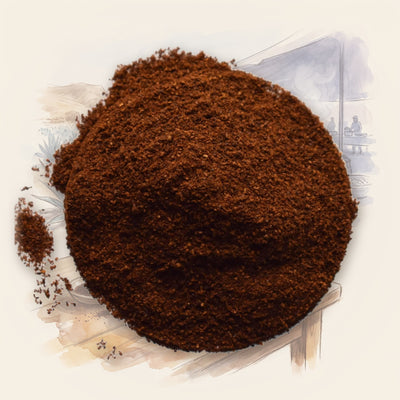
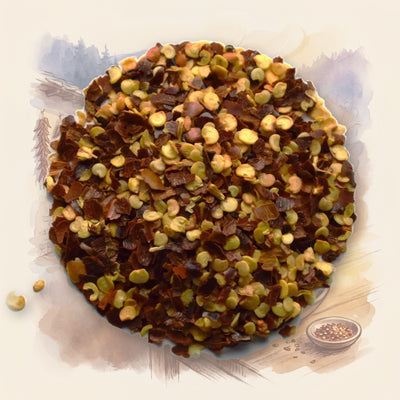
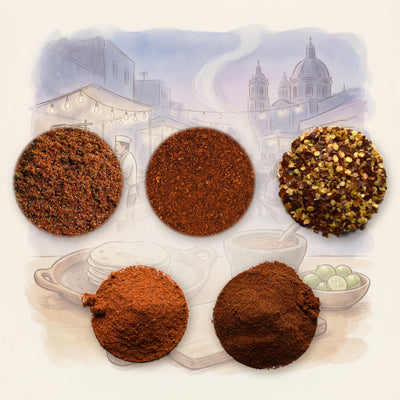
So the powders here are four different crafts. Chipotle Chili Powder is six days of pecan smoke. Guajillo Chili Powder and Pasilla Chile Powder are fruit dried hard and milled fine. Gochugaru (Korean Chile Flakes) is cut as a flake for a stew, and Paprika, Smoked is the same idea worked over oak fires in Extremadura for ten to fifteen days.