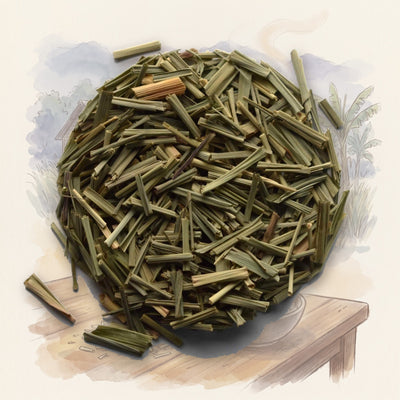
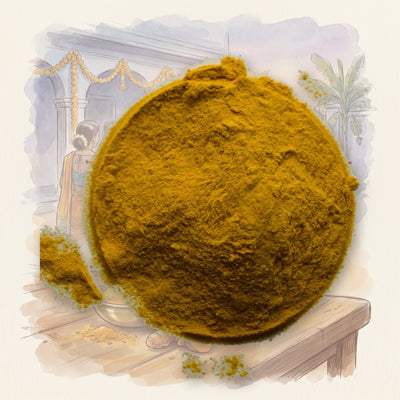
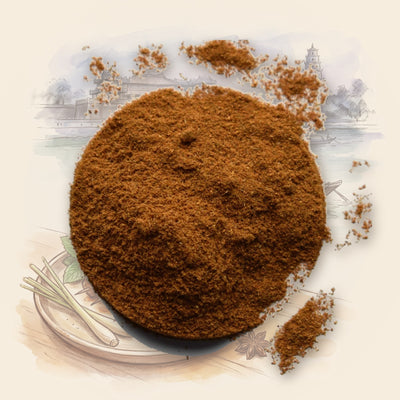
In a Thai kitchen the work starts in a stone mortar rather than a spice tin. Thai curries are built from fresh rhizomes, herbs and aromatic leaves instead of a mix of dried spices, and Indian-style curry powder has its own separate name there, phong kari. Galangal, lemongrass, makrut lime peel, shallot, garlic and shrimp paste are pounded until the paste holds together.
Green curry is younger than the mortar suggests. Thailand's first printed dictionary, of 1873, defined kaeng as a watery dish eaten with rice, with shrimp paste, shallots, chillies and garlic as its essentials. Kaeng khiao wan took shape in the reigns of Rama VI and Rama VII, in the first decades of the twentieth century, and the wan, sweet, describes the colour rather than the taste. The chilli had reached Siam on Portuguese and Spanish ships in the sixteenth or seventeenth century.
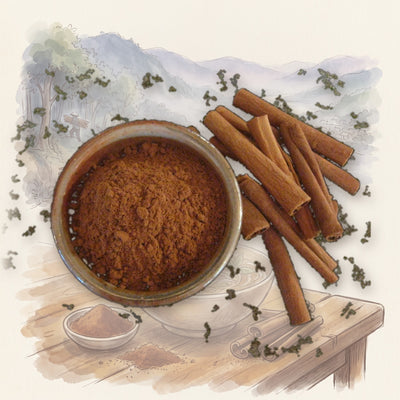
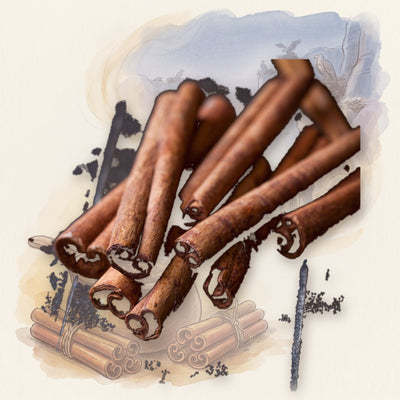
South across the water the method changes. In the Minangkabau highlands of West Sumatra meat simmers in coconut milk with galangal, lemongrass and turmeric leaf until the milk breaks into oil and the meat fries dark in its own sauce; the earliest written mention of rendang is in a Malay manuscript of the early sixteenth century. In Vietnam lemongrass runs through the whole cuisine, and Saigon cinnamon, the strongest of the cinnamons, is not grown around Saigon at all but in the Central Highlands, Quang Ngai above all. It goes into pho.
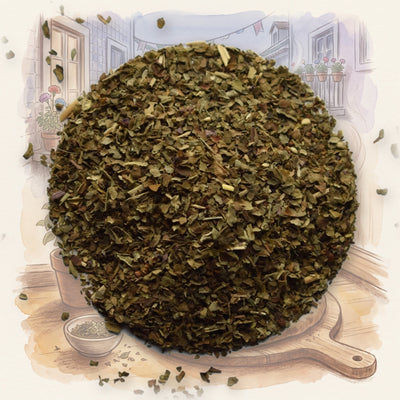
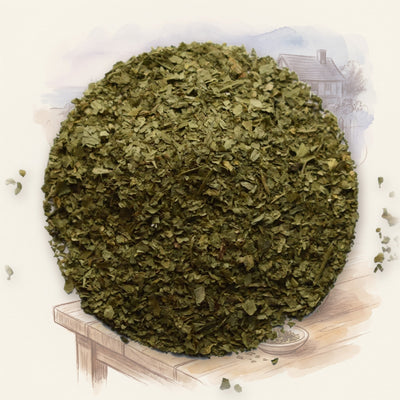
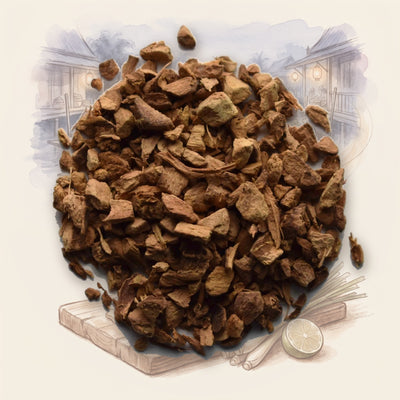
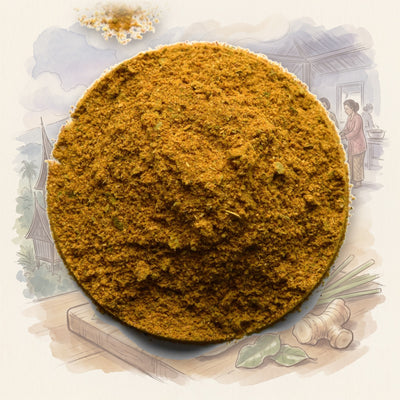
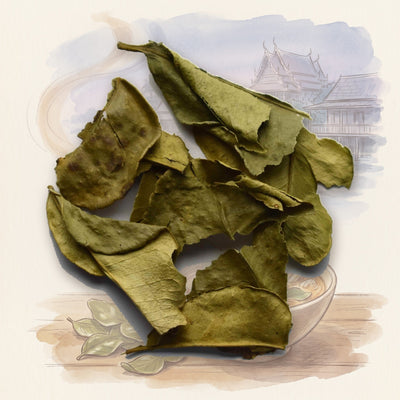
Galangal Root, Greater is the sharp one, citrus and pine rather than ginger's sweetness. Lemongrass goes in bruised, by the stalk. Kaffir Lime Leaf, Whole arrives as the double leaf and is stacked, rolled and cut hair-thin. Thai Green Curry Powder and Indonesian Rendang Curry Powder are wet pastes rebuilt dry for a pantry, Vietnamese Lemongrass Rub is the street grill, and Cinnamon, Ground, Vietnamese Saigon is the broth.