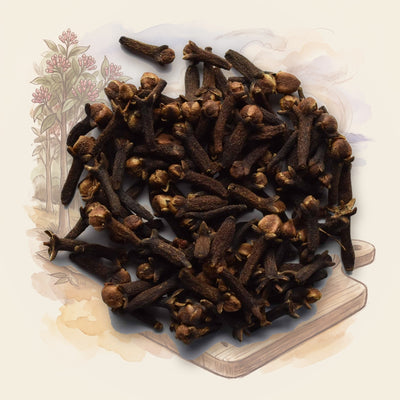
At Terqa on the Euphrates, excavators found a few kernels of cloves in a jar in the pantry of a private house. It belonged to a man named Puzurum and stood in the reign of Yadikh-Abu, against whom Samsu-iluna of Babylon fought in 1721 BC. Cloves then grew nowhere but a handful of small islands in the Moluccas.
Everything on this shelf is the part of a plant built to survive drying: bark, flower bud, seed, kernel, root, berry. That is the only reason a cold country has any of it. A clove is a bud picked before it opens, and the word comes from the Latin clavus, a nail.
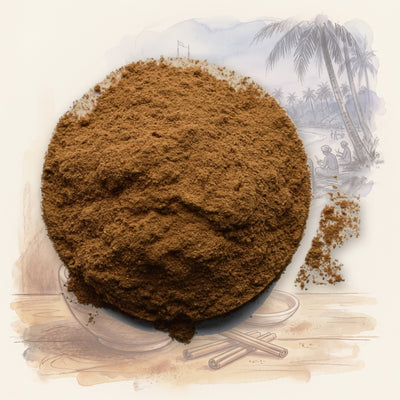
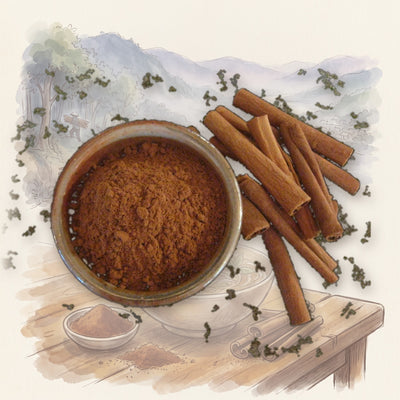
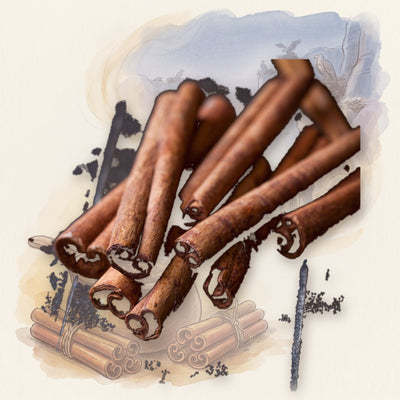
Three jars here say cinnamon and hold three different trees. True cinnamon, Cinnamomum verum, is Sri Lanka's, thin and papery. Korintje is C. burmannii from Sumatra, the commonest and cheapest cinnamon sold in the United States. Saigon cinnamon is C. loureiroi, grown in central Vietnam rather than near the city it is named after, and named for João de Loureiro, a Portuguese Jesuit who published his Flora Cochinchinensis in 1790.
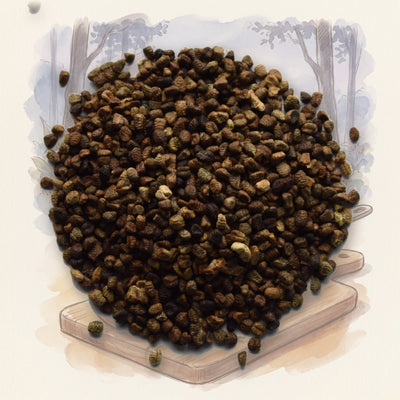
Cardamom travelled the other way. Kerala's Cardamom Hills carry the crop's name, and Travancore ran the trade as a royal monopoly from an 1822 proclamation until 1896. In 1914 a German coffee planter, Oscar Majus Kloeffer, set Kerala seed at his estate at Cobán in Guatemala, and by 2000 Guatemala led the world. Said plainly, those Alta Verapaz estates were granted to German planters out of communal Maya land, and Q'eqchi' workers were held on them under the mozo colono system.
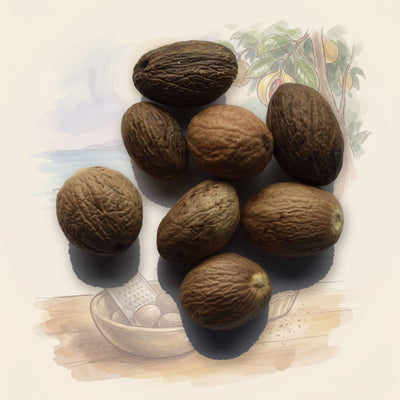
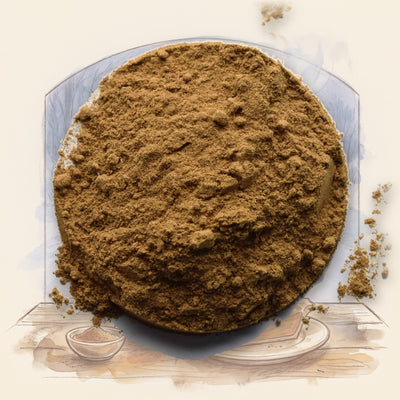
On the shelf that is Cinnamon, Sticks, Indonesian Korintje for the cider pot and Cinnamon, Ground, Sri Lankan True Ceylon, Organic for a custard. Cloves, Whole and Nutmeg, Whole hold their oils about a year longer than ground and want a mortar or a grater. Pumpkin Spice Blend is the same warm family already measured out.