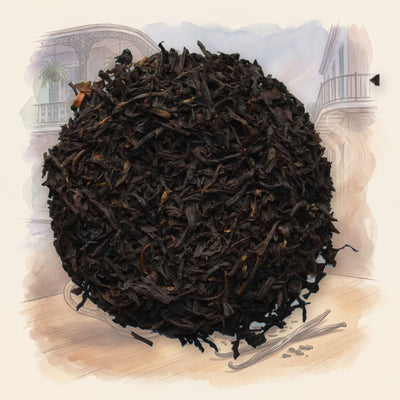
Réunion, 1841. Edmond Albius is twelve years old and enslaved on the estate of Féréol Bellier-Beaumont. One morning he lifts the rostellum of a vanilla orchid with a thin stick, presses the pollen onto the stigma with his thumb, and the flower sets fruit. Before that morning vanilla was Mexico's, where the Totonac had grown it since at least 1185. After it, Réunion, the old Île Bourbon, briefly led the world, and Madagascar, using his method, leads it now. France freed the enslaved in its colonies in 1848; Albius died poor at Sainte-Suzanne in 1880.
Bourbon vanilla is named for that island, not a whiskey. Chocolate reached Belgium under Spanish rule in 1635, and from the early twentieth century its cocoa came in quantity from the Belgian Congo, Belgium's colony. In 1912 Jean Neuhaus II filled the first praline in the family shop in Brussels, and in 1915 his wife, Louise Agostini, made the ballotin box to carry them.
Biscotti is the Medieval Latin biscoctus, twice-cooked; Antonio Mattei of Prato showed his anise cantucci at the Paris Exposition of 1867. Amaretto, the story goes, began in Saronno in 1525, when a young widowed innkeeper sitting for the painter Bernardino Luini gave him apricot kernels steeped in brandy. Legend has Lady Godiva riding naked through Coventry to lift her husband's tax, though the ride is first written down in the thirteenth century, long after her death.
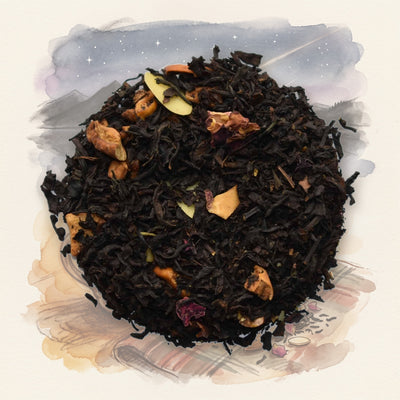
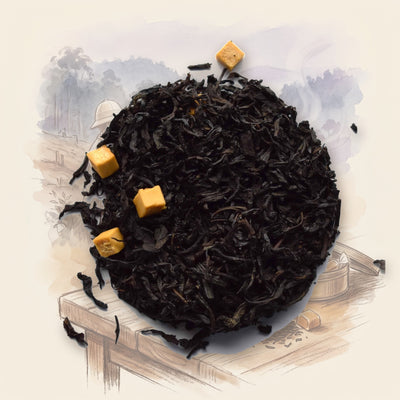
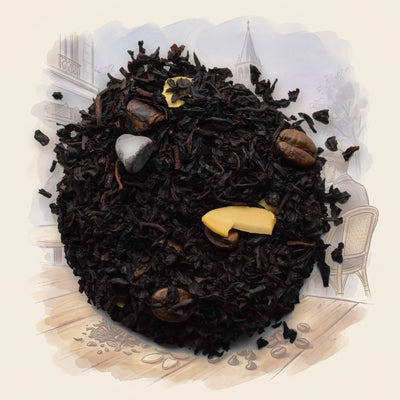
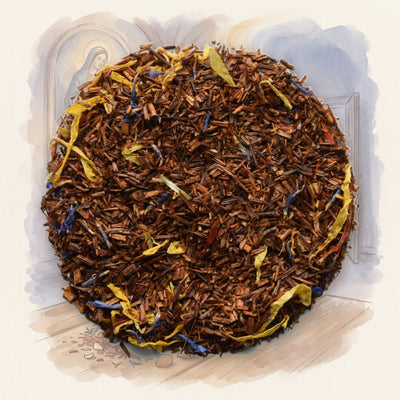
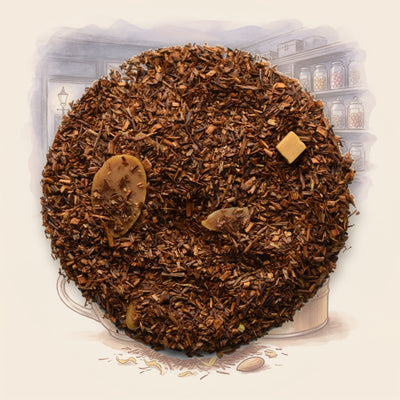
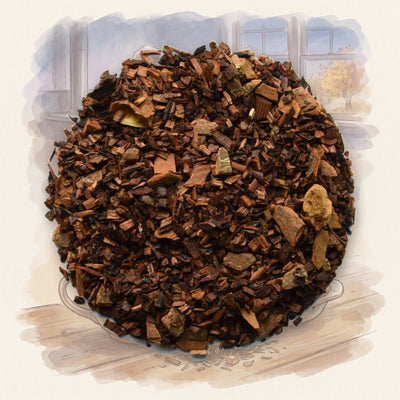
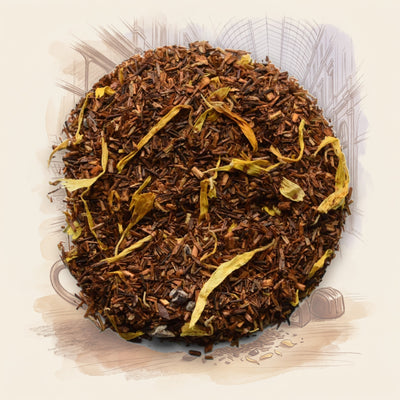
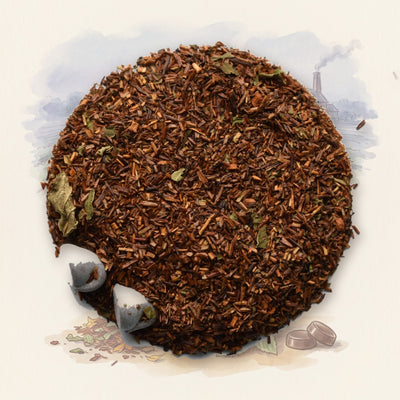
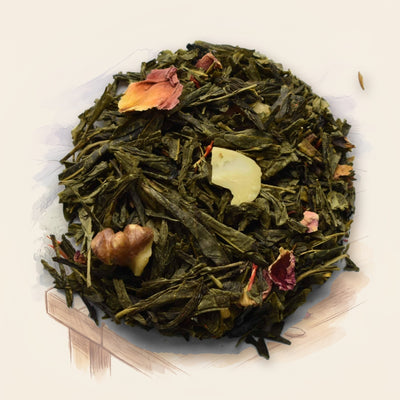
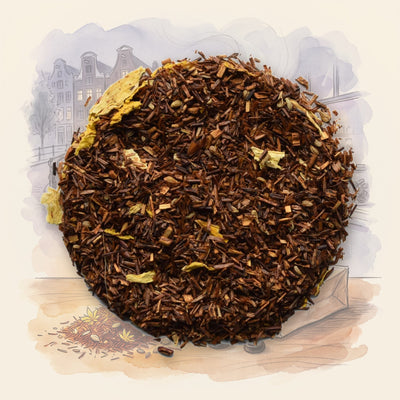
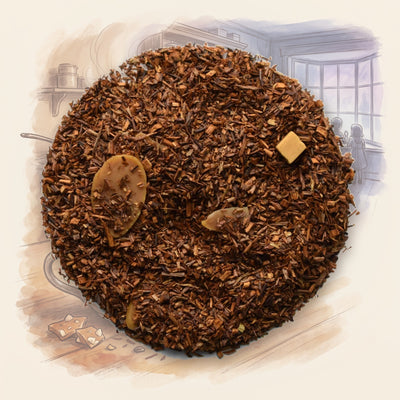
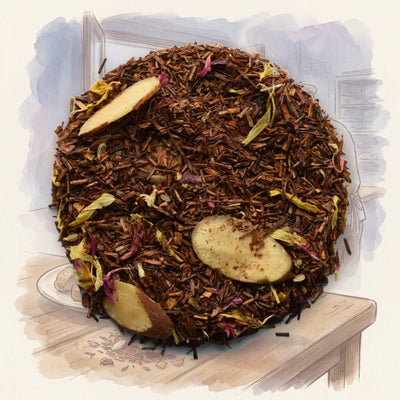
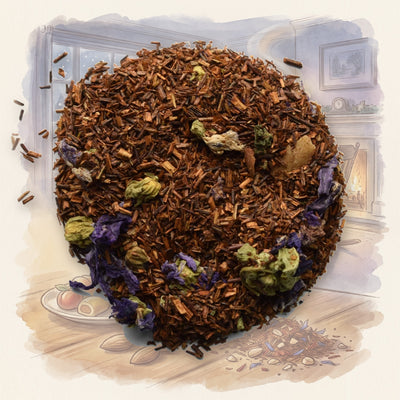
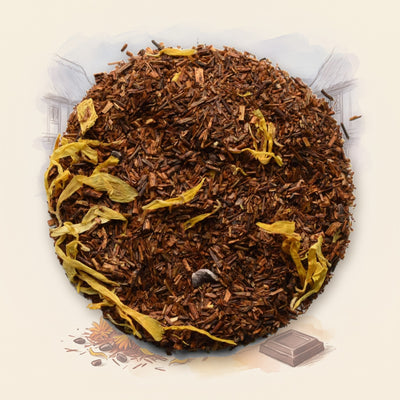
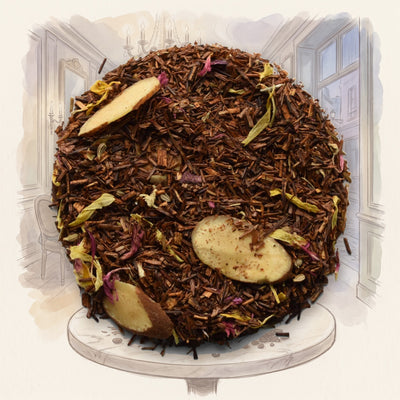
On the shelf, English Toffee on Ceylon black is the one most people ask for, Bourbon Street Vanilla carries Albius's thumb, Belgian Chocolate and Almond Biscotti sit on caffeine-free rooibos, and Apple Crumble, Organic, on honeybush, tastes like the oven just opened.