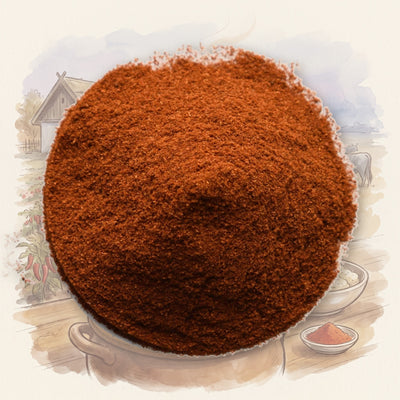
Autumn on the Great Hungarian Plain, and the pepper harvest hangs in long strings down the whitewashed front of a farmhouse to dry. The plant is a New World one and it arrived late. Spanish and Portuguese traders brought capsicums into Europe in the sixteenth century: Italy had them by 1526, Germany by 1543, Hungary by 1569. The word itself is Hungarian, a small form of the Serbo-Croatian papar, pepper.
The growing towns are Szeged and Kalocsa, and the grades are still sold under their Hungarian names: különleges, édesnemes, félédes, rózsa, erős. Gulyás began as the word for a cattle herder before it meant his stew, and paprika joined the pot only after the sixteenth century. István Czifray printed the first documented recipe for chicken paprikash in 1830. In 1937 a Nobel Prize went to work done at Szeged, where fresh local paprika was the material that settled what vitamin C was.
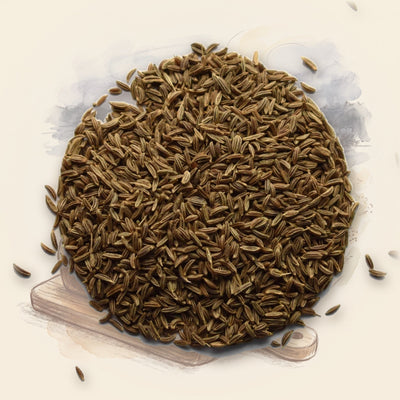
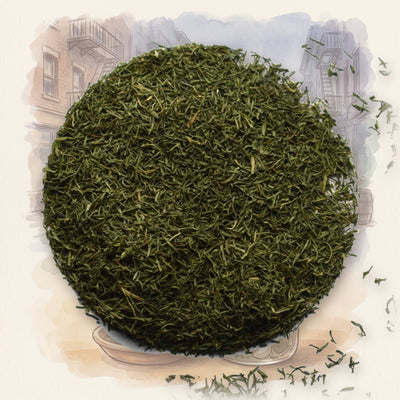
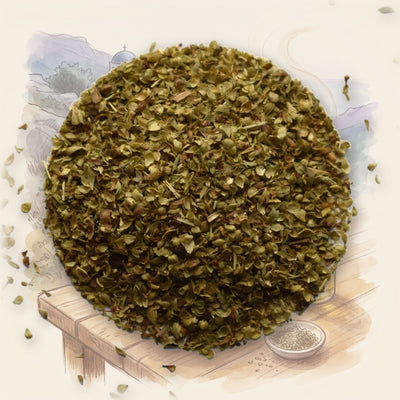
The rest of the table is northern. Caraway runs through the rye bread, the cabbage and the boiled potatoes from Bohemia to the Baltic, and Finland now grows about a third of the world's crop. Dill is a staple of Russian, Polish, Czech, Bulgarian and Hungarian kitchens, in the soup, the sauce and the pickling crock. Marjoram is Wurstkraut in German, the sausage herb, and it goes into żurek, the sour rye soup Poland eats at Easter.
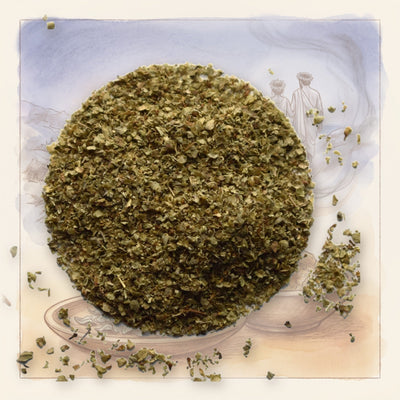
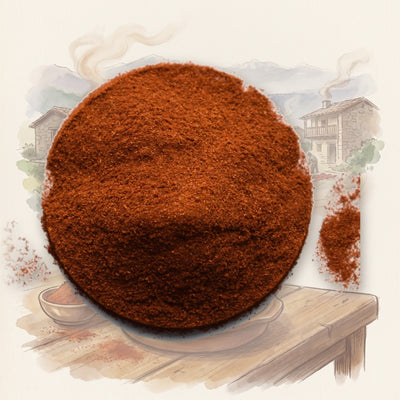
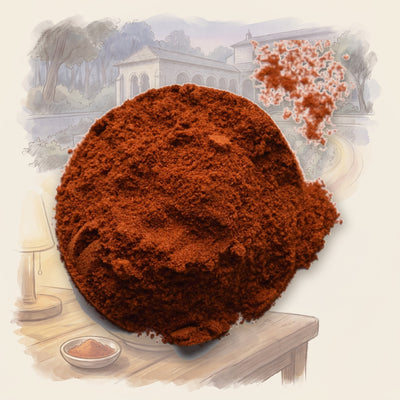
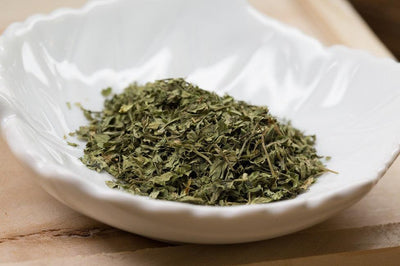
Paprika, Hungarian is deep red, sweet, and carries no heat at all, and Paprika, Smoked is the Spanish cousin, dried a fortnight over oak fires. Caraway Seed, Whole goes into the goulash and the loaf. Dill Weed belongs with sour cream and cucumbers, Marjoram Leaf, Whole with sausage and stuffing, and Tarragon Leaf is the outlier, the herb of a Georgian lamb stew and of the green soda a Kutaisi pharmacist mixed in 1887.