Seven in the morning in a Lebanese hill village, and the baker presses her fingertips into rounds of dough before the za'atar and the olive oil go on. Those dips are what the bread is named for: manakish, from the Arabic for engraving. UNESCO inscribed the practice in 2023. The herb under the name is Origanum syriacum, which grows wild across the hills of the Levant and which Jewish tradition identifies with the ezov of Exodus.
The wild plant has also been contraband. Israel declared it a protected species in 1977; a household could pick ten kilograms a year, and commercial picking risked six months in prison. The ban was repealed only in 2018. Mahmoud Darwish had made the herb a figure for Palestinian identity in 1976.
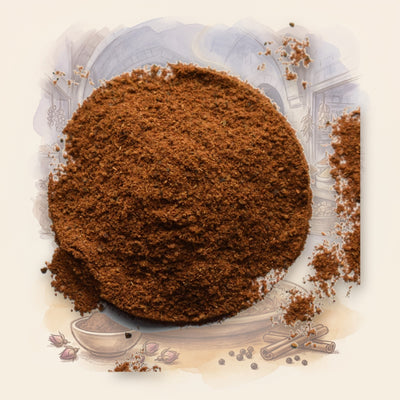
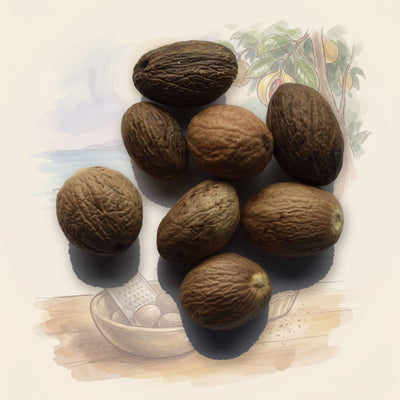
Sumac is the other half of this table, and its name is the Syriac word for red. Rome soured its dishes with it before lemons reached the Mediterranean. The oldest Arabic cookbook that survives came out of the Abbasid court kitchens of tenth-century Baghdad, and gives a whole section to sumac stews, one of them under the name of Harun al-Rashid. Baharat is the plainest word of all, Arabic for spices, and a thirteenth-century Syrian cookbook already carries a mixture of nutmeg, cloves, rose buds and cardamom. At Kayseri, under Mount Erciyes, beef is salted, pressed and dried, then sealed in a paste of fenugreek, cumin, garlic and paprika and dried again.
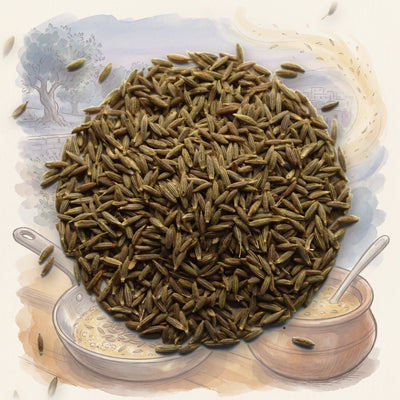
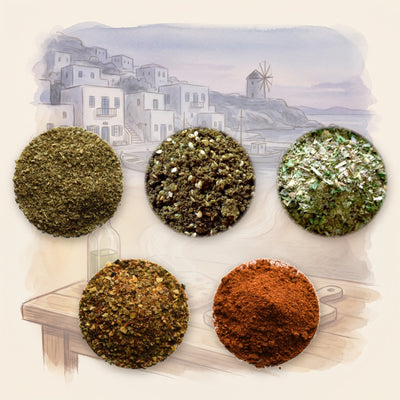
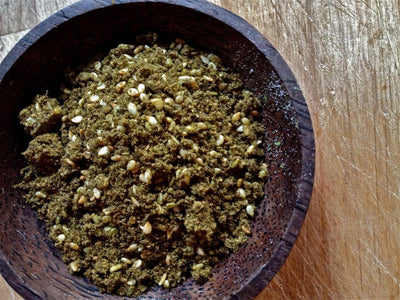
Za'atar is the breakfast jar, loosened with oil and spread thick. Sumac is the sour that keeps, scattered at the end rather than cooked in. Baharat is the seven-spice tin, sabaa baharat in the Levant, and the rose in this one puts it in a line running back to that Syrian cookbook. Cumin Seed, Whole and Fenugreek, Whole are the crust on the Kayseri beef, and Rose Petals, Organic belong beside Cardamom Green Pod in the sweets and the coffee pot.