Ingredients · Spice
Onion
Allium cepa · Amaryllidaceae (amaryllis family)

What it’s like, and how to use it
How to use it
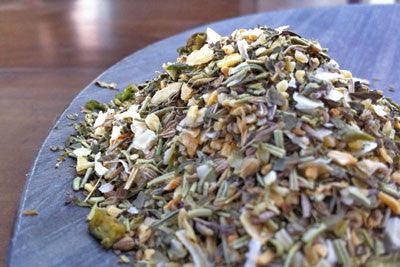
Granulated into rubs, chili and long-cooked things. Minced where the texture is wanted — meatloaf, burgers, stuffing. Powder into dips, dressings, ranch, and anything smooth. A guide from McCormick, for its own product: one tablespoon of onion powder stands in for one medium onion. Like dried garlic it scorches, so keep it off dry high heat.
With food
Beef and every ground meat. Potato. Sour cream and buttermilk. Tomato. Cheese. Beans. Bread stuffing. Eggs.
With spices
Garlic, always. Paprika and black pepper. Celery seed. Thyme, sage and marjoram for poultry. Cumin and chile for Tex-Mex. Mustard powder.
With tea
Not a tea ingredient.
Its story
Where it comes from
The wild ancestor is not known. Iran, western Pakistan and Central Asia are the proposed homelands, and the plant has been grown and selectively bred for at least seven thousand years. Most dried onion in North American trade is grown and dehydrated in California — Vacaville and Gilroy both built industries on it — but lot origin here is unconfirmed.
What happened
Onions and their relatives are all over the Yale culinary tablets from around 2000 BC — the oldest known recipes in the world, which one Assyriologist described as obsessed with every member of the onion family. Egyptians read eternity into the onion's circle-within-a-circle, buried them with the dead, and placed them in the eye sockets and ears of Ramesses IV. Pliny catalogued Roman beliefs that onions helped the eyes, sleep, mouth sores, toothache and dog bites. In Numbers the Israelites remember Egypt's onions in the desert. Chicago takes its name from the Miami-Illinois word shikaakwa, the wild allium that grew there: a Frenchman named Joutel wrote in 1687 that the place was so called on account of the quantity of garlic growing in this district, in the woods. And in the twentieth century California's dehydrators turned the onion into something that keeps in a cupboard.
On the shelf with it
Sold on its own, and in these blends.
-
 Sold out
Onion, Powder
Regular price From $6.99 CADRegular price -
Poultry Seasoning
Regular price From $9.99 CADRegular price -
Cajun Blackening Spice Blend
Regular price From $9.99 CADRegular price -
Pizza Spice Blend
Regular price From $9.99 CADRegular price -
Mediterranean Spice Blend
Regular price From $9.99 CADRegular price -
Mesquite Blend
Regular price From $9.99 CADRegular price -
Chicken Rub Blend
Regular price From $10.99 CADRegular price -
Taco Seasoning
Regular price From $9.99 CADRegular price -
BBQ Seasoning
Regular price From $9.99 CADRegular price -
-
Jamaican Jerk
Regular price From $9.99 CADRegular price -
Bayou Creole Seasoning Blend
Regular price From $9.99 CADRegular price -
Hickory BBQ Seasoning
Regular price From $9.99 CADRegular price -
-
Indonesian Rendang Curry Powder
Regular price From $9.99 CADRegular price -
Vietnamese Lemongrass Rub
Regular price From $10.99 CADRegular price -
Onion Sea Salt
Regular price From $5.99 CADRegular price -
Chile-Lime Seasoning
Regular price From $9.99 CADRegular price -
Onion, Minced
Regular price From $6.99 CADRegular price -
Onion, Granulated
Regular price From $6.99 CADRegular price -
 Sold out
Lemon Dill Sea Salt
Regular price From $9.99 CADRegular price -
 Sold out
Classic All-Seasoning, Salt-Free
Regular price From $10.99 CADRegular price -
 Sold out
Ethiopian Berbere
Regular price From $9.99 CADRegular price -
 Sold out
Chipotle BBQ Seasoning
Regular price From $9.99 CADRegular price -
 Sold out
Vadouvan French Masala
Regular price From $10.99 CADRegular price -
-