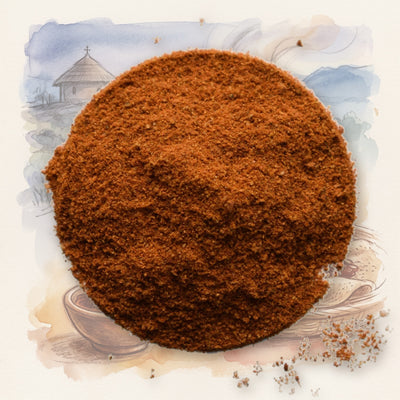
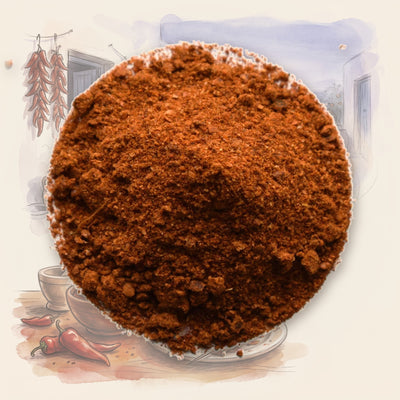
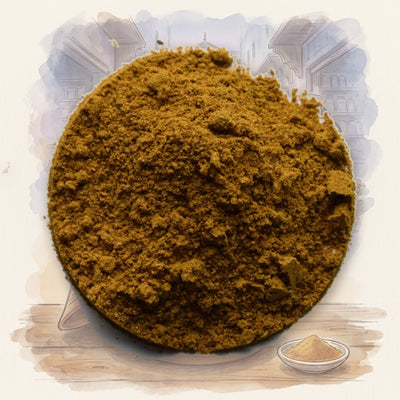
On the Cap Bon peninsula in Tunisia the peppers dry in the sun, then are split, seeded, washed and ground with salt, garlic and coriander in a mortar. The work is done together, by women, with family and neighbours, and the year's supply goes into glass or pottery jars. UNESCO inscribed harissa on its list of the intangible cultural heritage of humanity on 1 December 2022.
The pepper is an incomer. It crossed from the Americas on Spanish and Portuguese ships, reaching Tunisia in the years Spain held Tunis and Ethiopia in the sixteen hundreds. Pedro Páez, the Jesuit who stood at the source of the Blue Nile in 1618, wrote that chile seed had come with a shipment from India and that the people liked it very much. In Amharic the word for that pepper and the word for the blend are now one word. In Fez, ras el hanout means the head of the shop: the seller's best, with no fixed recipe under the name.
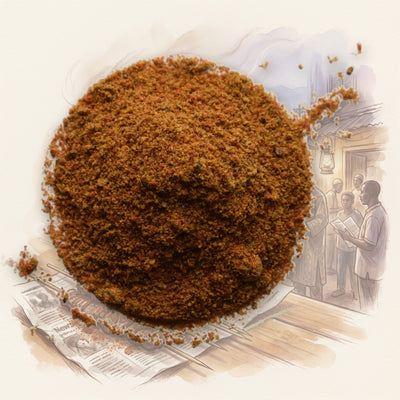
Two of these blends have shorter and harder histories. Chakalaka is said to have begun around the gold mines of Johannesburg, cooked out of tins by Mozambican mineworkers to eat with pap. By 1907 the mines' recruiting association had brought 47,656 men from Mozambique alone, hired on no permanent basis, kept from their families, paying a monthly fee to the colonial government at home. Suya is the Hausa grill of northern Nigeria, sold on street corners across Lagos and handed over in old newspaper.
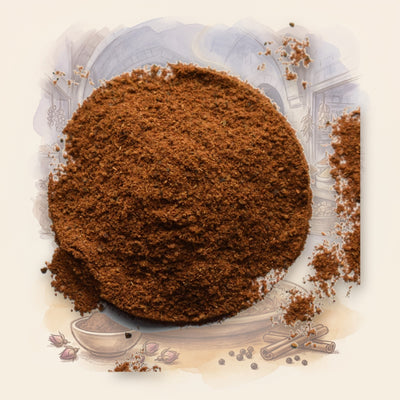
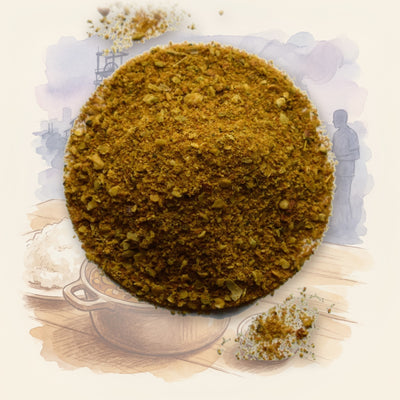
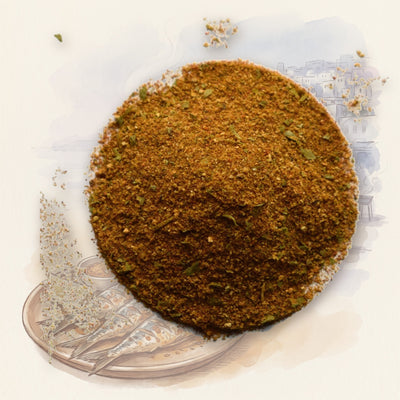
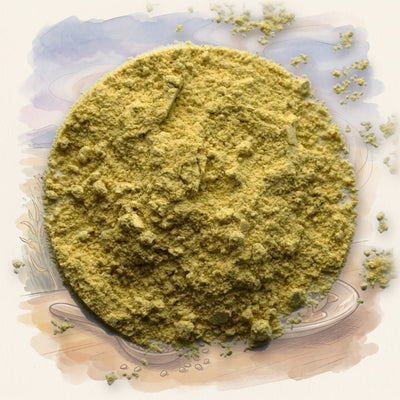
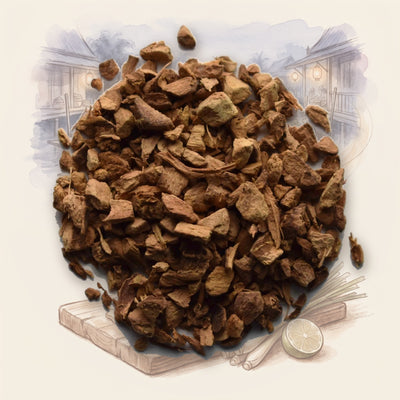
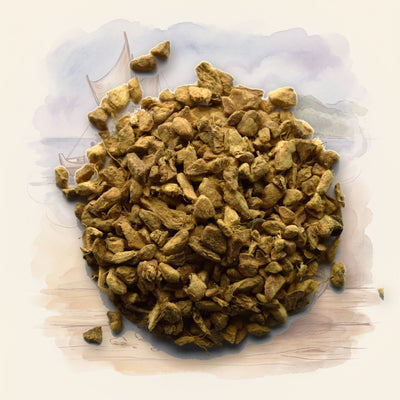
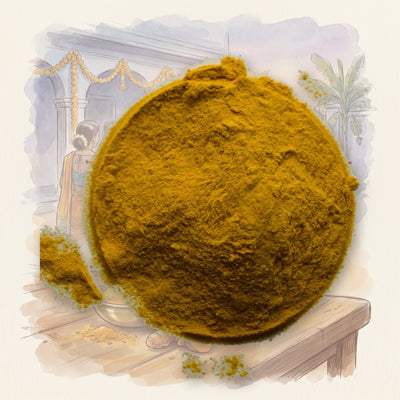
So the shelf holds Harissa, the dry version of that Tunisian mortar, to loosen with oil or yogurt, and Ethiopian Berbere, its chiles carried on ginger, clove, allspice and fenugreek. Ras El Hanout leans to warm sweet spice, with no cumin or coriander in it. Chakalaka seasons the relish rather than being it, Suya goes on skewered beef, and Chermoula is the Maghreb's rub for fish over coals.