Specialty Spice Blends
Read its story →
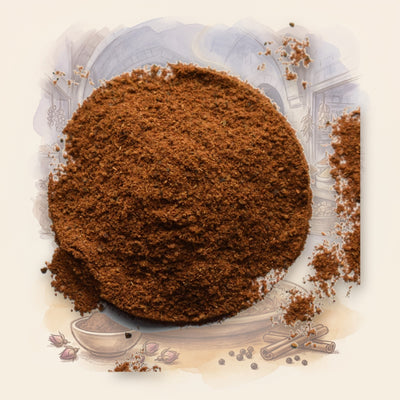
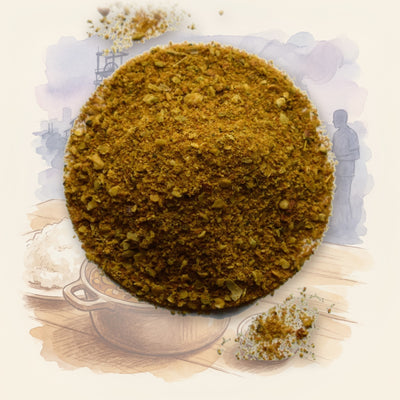
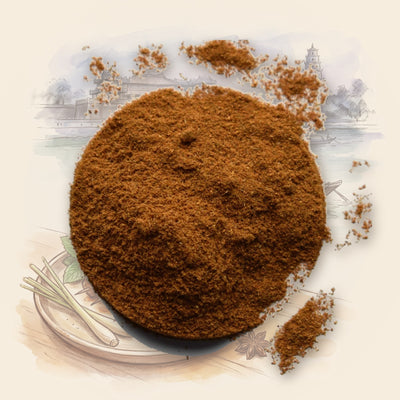
Syria, in the thirteenth century. An anonymous author gathered 635 recipes into a book called the Wusla and set recipes for soap and breath-sweeteners beside the food. One of its spice mixtures is nutmeg, cloves, rose buds and cardamom. Seven centuries on, the shop's Baharat still carries rose. The word is plain enough: in Arabic baharat means spices, and the Levant counts seven of them, sabaa baharat.
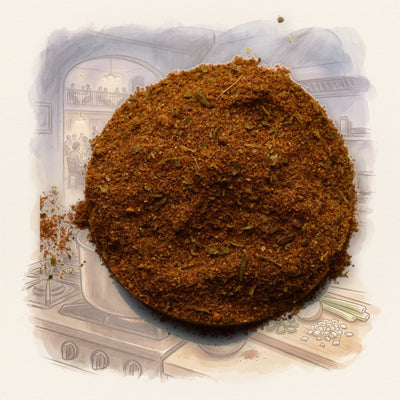
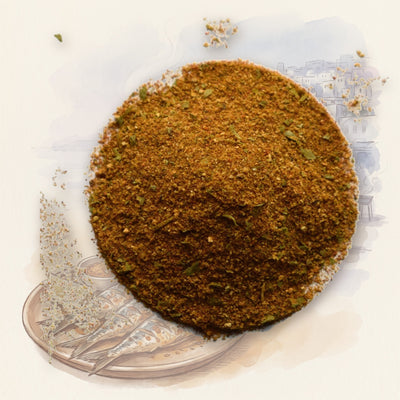
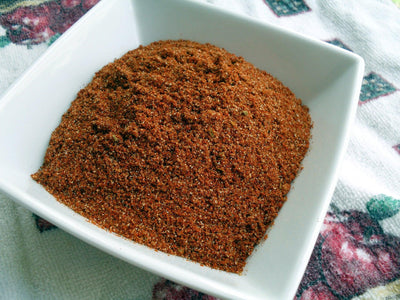
Most blends belong to a household before they belong to a jar. Harissa takes its name from the Arabic harasa, to pound, after the mortar it is made in, and it is made by women together, in a family or a neighbourhood. Tunisia's pepper growers keep a calendar with periods when nobody sows, hang chillies on their looms and make coral replicas of them against bad luck. UNESCO added harissa to its heritage list on 1 December 2022. The pepper itself is a newcomer, carried from the Americas by the Spanish in the sixteenth century, most likely while they held Tunis.
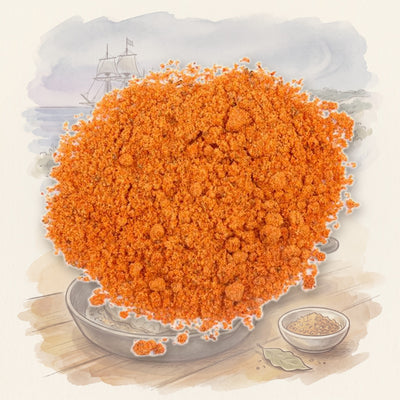
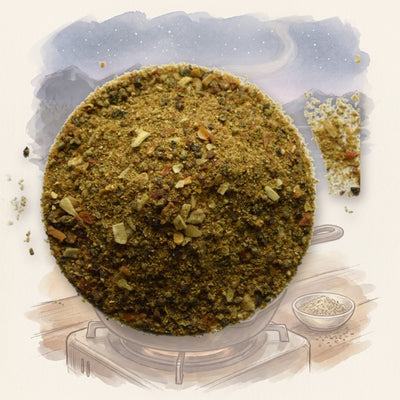
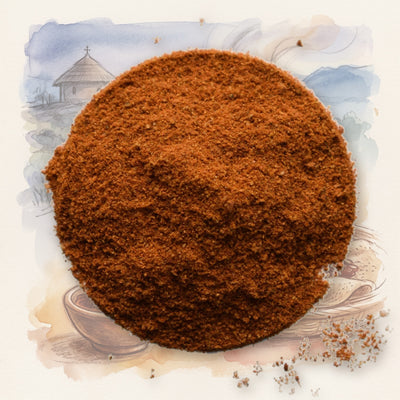
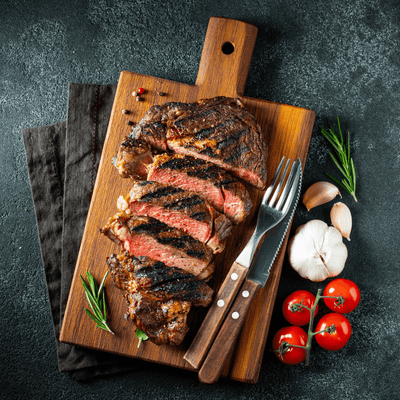
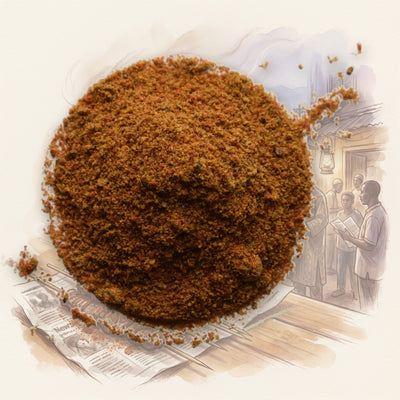
Others are named for whoever sells them. Ras el hanout means head of the shop, the best of what the merchant has, and there is no fixed recipe under it; good mixtures run past twenty spices. In Hausa, mai suya is the one who sells suya, and the craft is slicing the meat thin and watching the coals so it never burns. Ethiopian berbere went the other way. The blend gave its name to the chile in it, which the Portuguese brought in the seventeenth century.
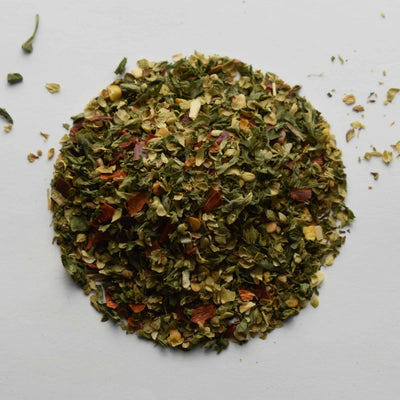
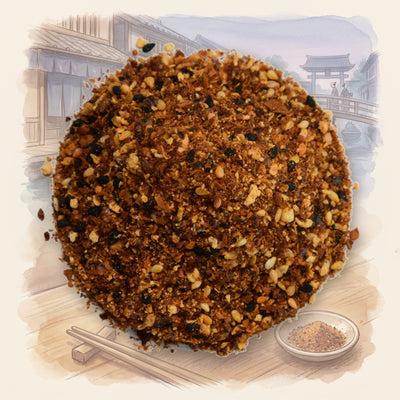
Baharat is that seven-spice tin, and Harissa is the paste's dry half. Ras El Hanout here leans to warm sweet spice, with no cumin or coriander in it. Suya carries ground peanut and goes on after the fire, Ethiopian Berbere wants a long pot, and Shichimi Togarashi (Seven Spice) is the shaker that Edo's temple-gate sellers built a trade on.
Results