Isparta, in south-western Turkey, runs on one flower. Müftüzade Gülcü İsmail Efendi brought a rose plantlet down from the Kazanlak region in the 1870s and is said to have made the town's first rose oil. The story goes that he carried the cuttings out hidden inside his walking cane. Everything on this shelf is sold the same way he sold that oil: one plant at a time, under its own name.
The flower has always been worth more than it weighs. In 1888 Lawrence Alma-Tadema painted a Roman emperor smothering his dinner guests under falling petals, and is reputed to have had rose petals sent up from the south of France every week through the four months he worked on it, because roses were out of season in Britain. The banquet itself comes from the Historia Augusta, which says violets and other flowers, and is probably invented.
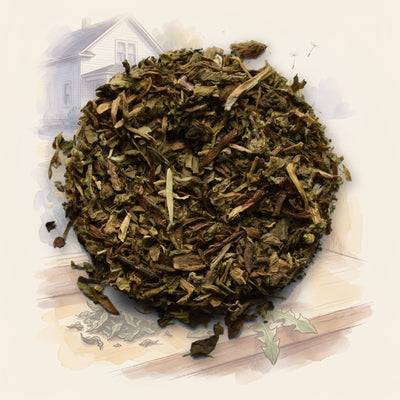
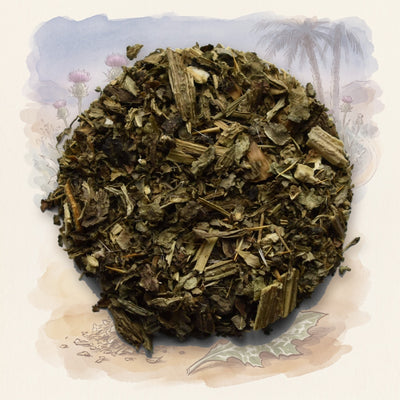
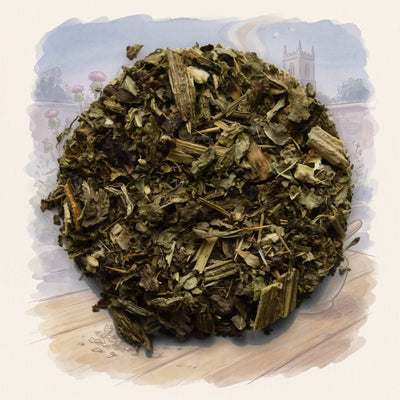
Mullein is the soft one, and its name says so: it came through Anglo-French moleine from the French mol, soft, for leaves like felt. English piled on more names from the same evidence, lamb's ear, velvet mullein, beggar's blanket, flannel leaf, shepherd's club, Aaron's rod. It is not a North American plant. It arrived by the middle of the 1700s, was described in Michigan in 1839 and on the Pacific coast in 1876, and is now common in every state.
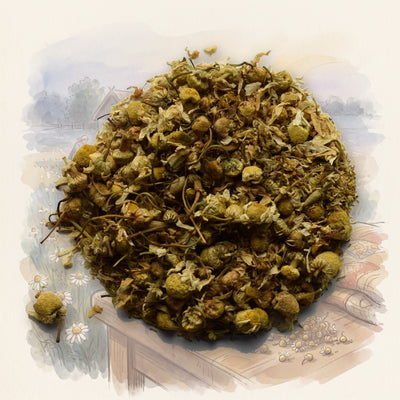
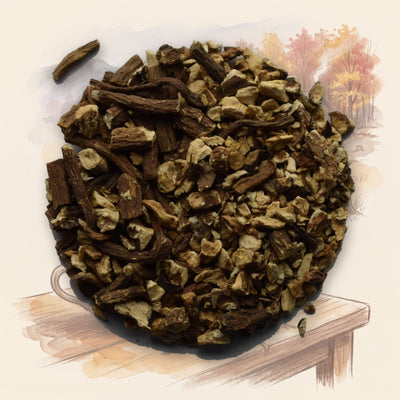
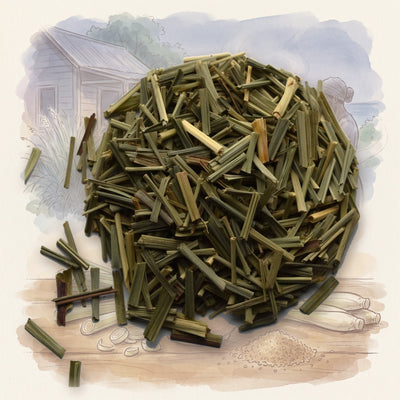
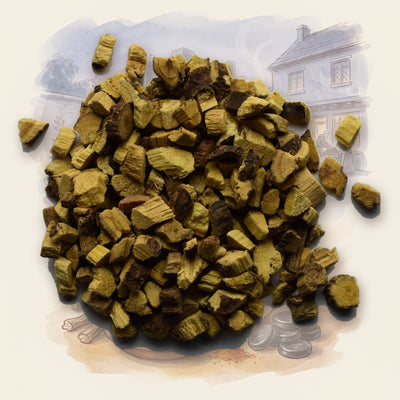
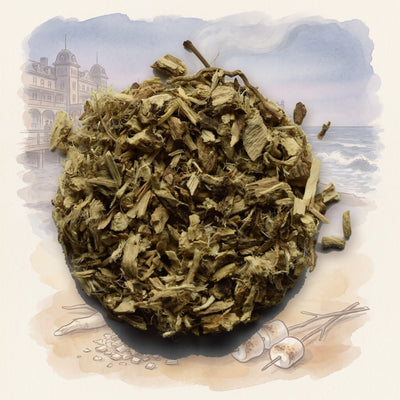
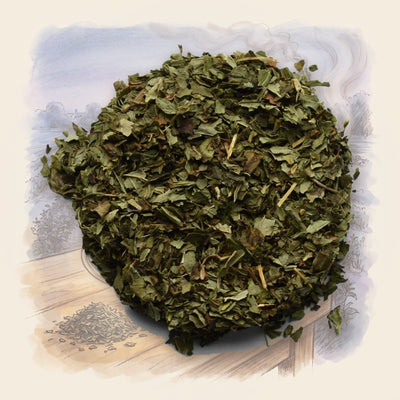
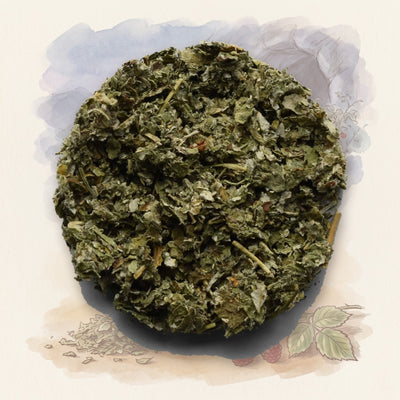
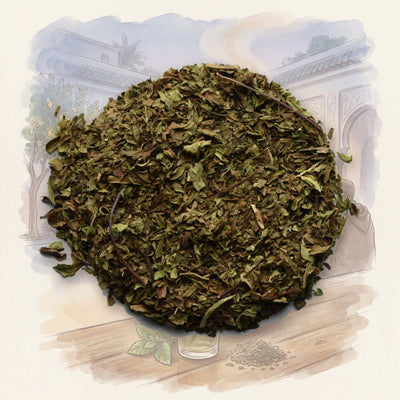
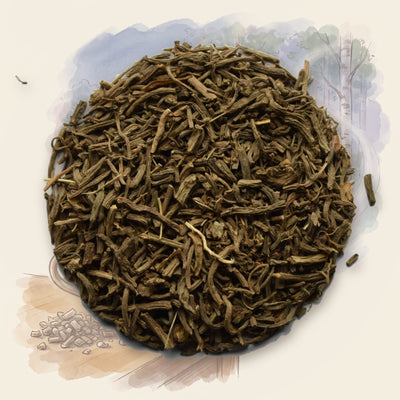
None of it is tea. Peppermint, Organic and Spearmint are the two mints, the first a hybrid of the second with watermint. Chamomile, Organic and Rose Petals, Organic are the flowers, Lemongrass, Organic the cut stem, Mullein - Organic the felt leaf. Licorice Root, Organic, Burdock Root, Organic and Marshmallow Root are what comes up with a fork.