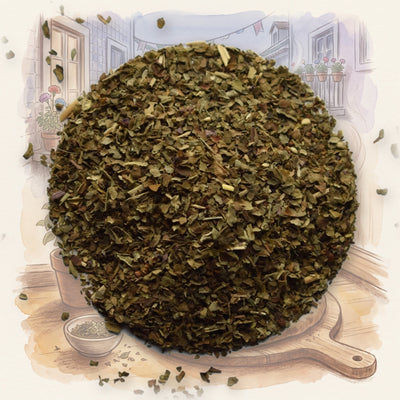
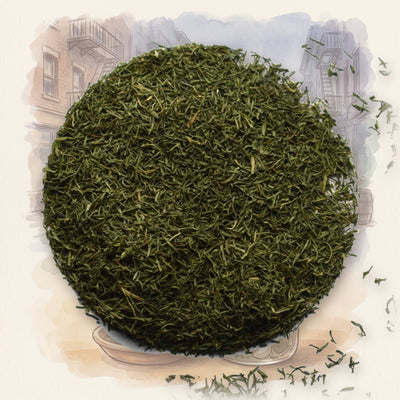
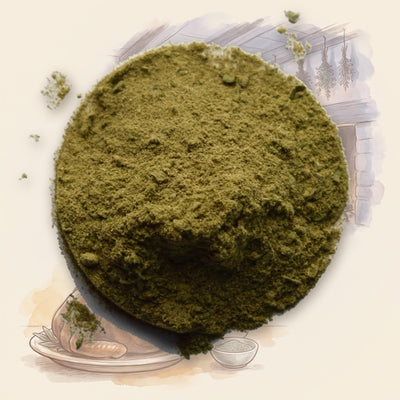
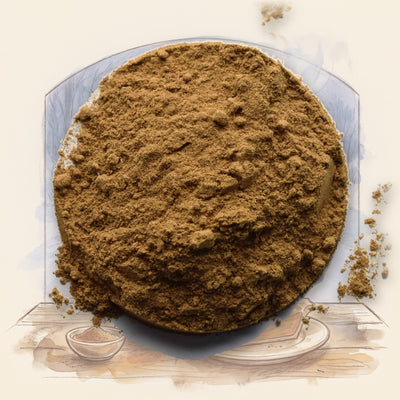
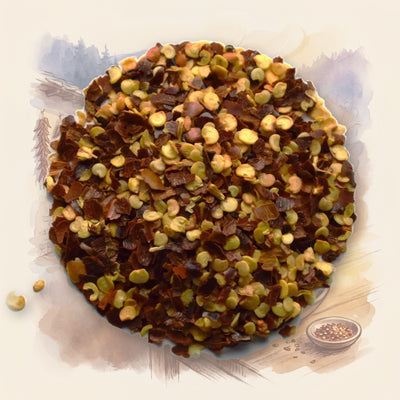
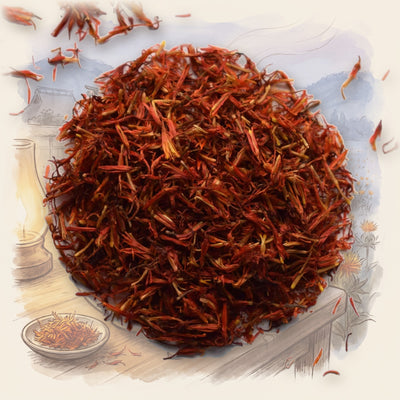
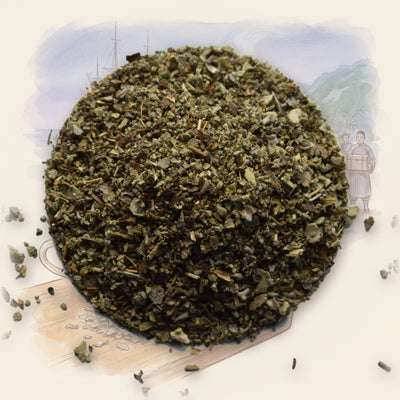
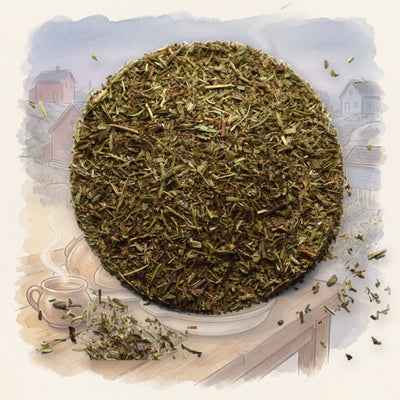
Hartford, Connecticut, 1796. Amelia Simmons, who signs herself an American orphan, tells her reader how to stuff a turkey: a grated wheat loaf, butter, salt pork, two eggs, and a little sweet marjoram, summer savory, parsley and sage, pepper and salt. Fill the bird and sew up. Summer savory and sage are still on this shelf, two hundred and thirty years on.
What changed after her was the jar. Chiles were seasonal, so in the 1890s Willie Gebhardt, running a café behind a New Braunfels saloon, had ancho hauled up by the wagonload from San Luis Potosí and ground it, selling it from 1896 as Eagle Brand Chili Powder so his chili tasted the same in February. In Baltimore in 1939 Gustav Brunn, newly out of Germany with a hand-crank mill he had refused to leave behind, watched crab steamers buy spices a pound at a time to mix their own, and mixed it for them instead.
The continent's most famous cooking was built by people whose names were not written down. Enslaved cooks shaped Southern barbecue and were in many cases the pitmasters; at Atlanta's Cotton States Exposition in 1895 the Black cooks' work was credited to a white sheriff. Henry Perry, born near Memphis in 1874, was selling smoked meat in Kansas City by 1908 from a stand in the Garment District, twenty-five cents a portion, wrapped in newsprint.
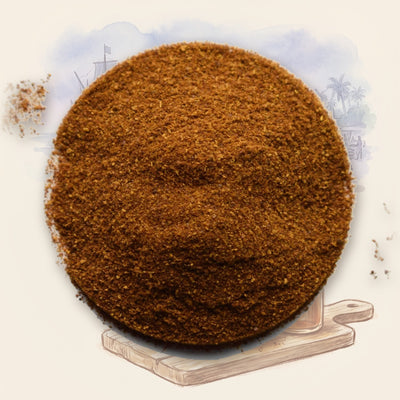
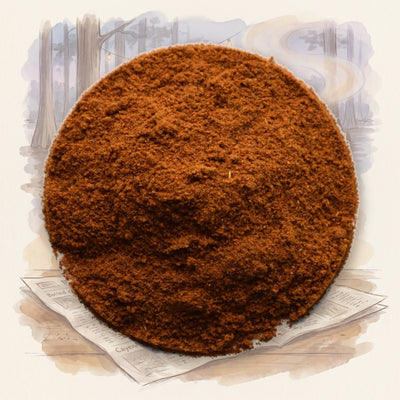
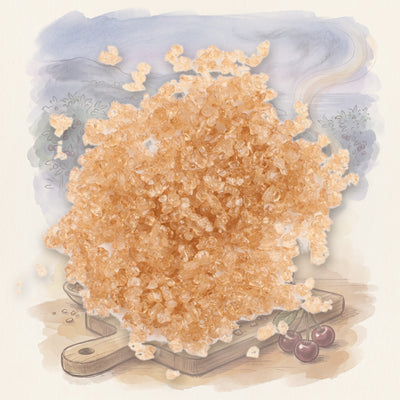
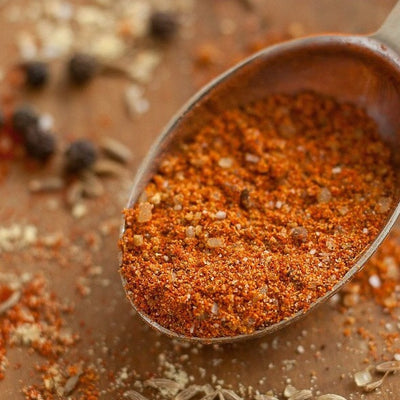
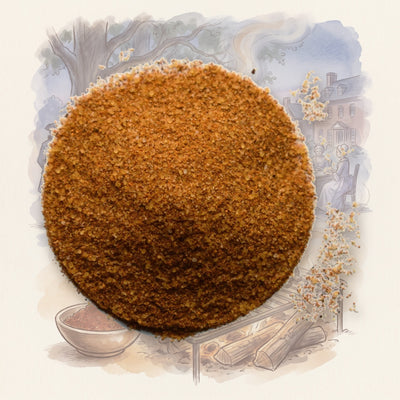
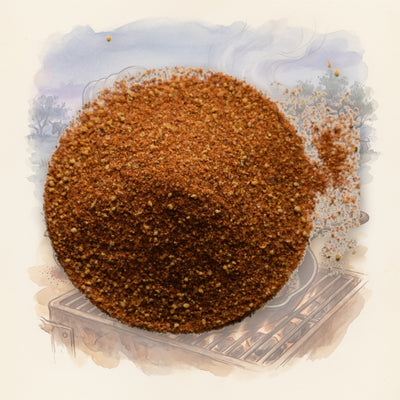
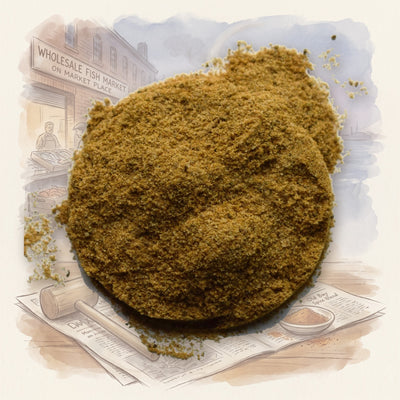
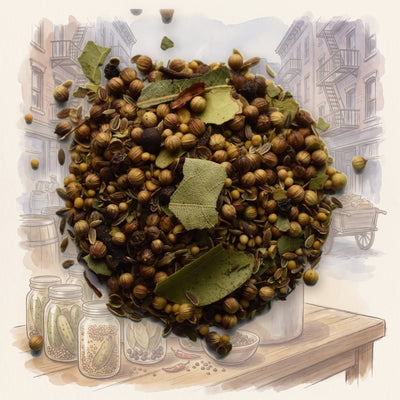
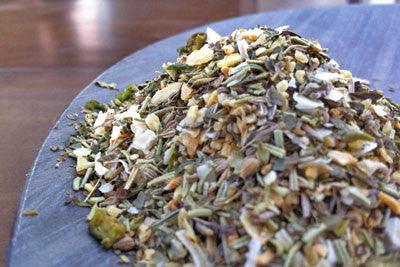
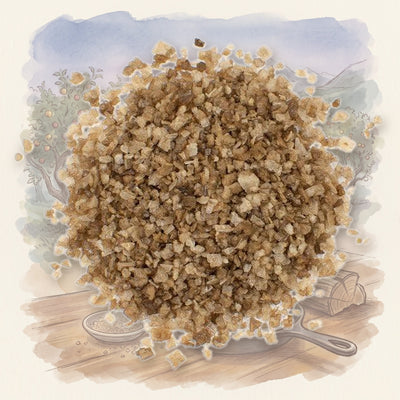
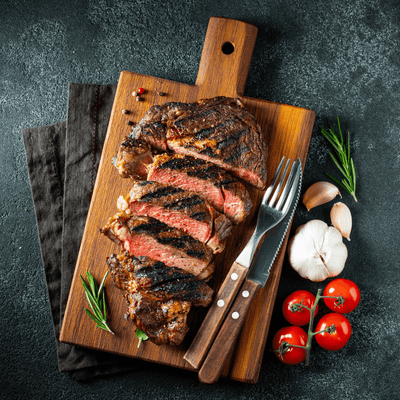
North of the line the habits rhyme. Montreal steak seasoning came off the deli counters of boulevard Saint-Laurent, built on the smoked-meat rub Romanian-Jewish immigrants brought with them, and St. Laurent Steak Spice Blend is that counter in a jar. Old Bay Spice Blend is the Chesapeake boil and Cape Cod Fish Seasoning the fillet above it. Texas BBQ and Mesquite Blend are two arguments about wood. Poultry Seasoning is Amelia Simmons's line, brought down here on the second Monday of October.