In a Srinagar kitchen the tea is pink. Noon chai, salt tea, is gunpowder green tea boiled about an hour with baking soda until the liquor turns burgundy, then turned pink with milk and poured from a samovar. The soda came down from the Tibetan plateau by way of Ladakh; Kashmir swapped the yak butter for milk. Kahwah is the guest’s cup, green tea with cinnamon, cardamom, ginger and cloves.
Masala chai’s tea came to India as a colonial crop. The Singpho of Assam were brewing the native leaf before any Briton found it in the 1820s; when the Qing cracked down on the opium that paid for Chinese tea, the East India Company set up its Tea Committee in 1834 to grow tea in Assam. The gardens were worked by indentured labourers. The Workmen’s Breach of Contract Act of 1859 made leaving a crime punishable by flogging, and of 84,915 workers recruited between 1863 and 1866, 30,000 were dead by June 1866. Their descendants still live on Assam’s estates.
Few Indians drank tea before the twentieth century. The Indian Tea Association pushed tea breaks in the mills and mines and backed stalls along the railways, and disapproved when the chaiwalas added spices and extra milk and sugar. The street’s version won: cutting chai in Mumbai, the clay kulhar on the platform at dawn.
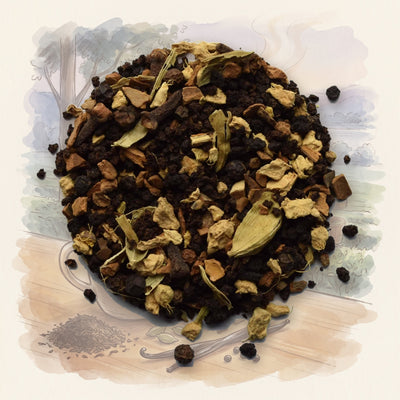
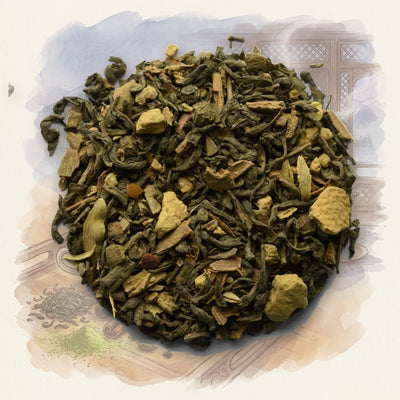
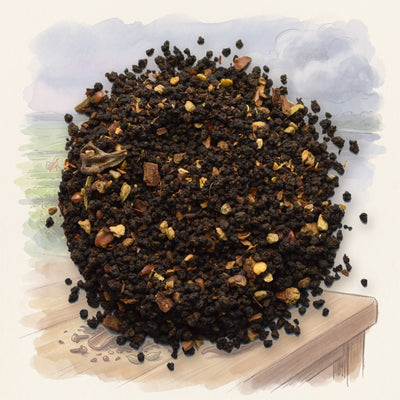
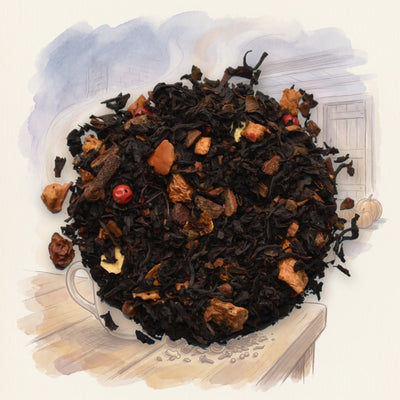
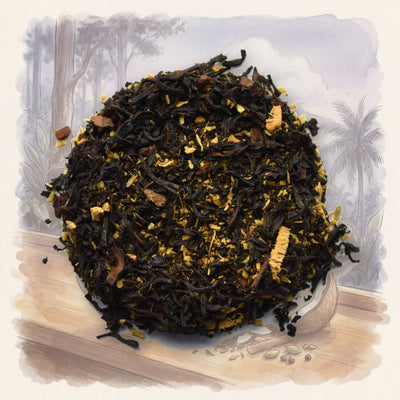
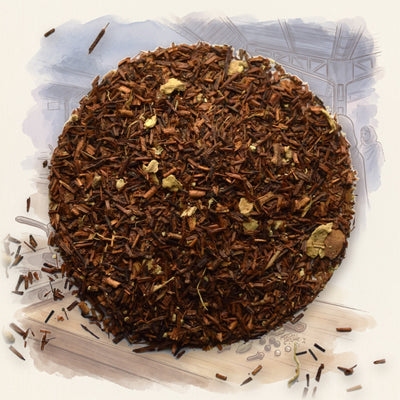
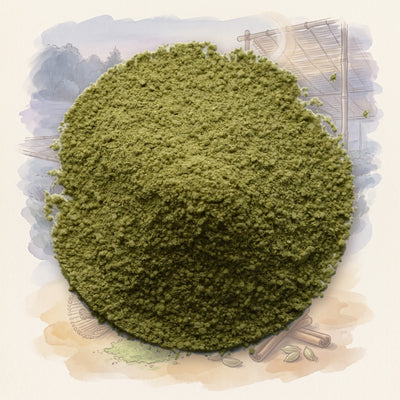
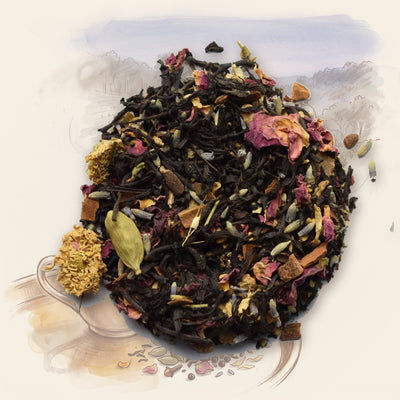
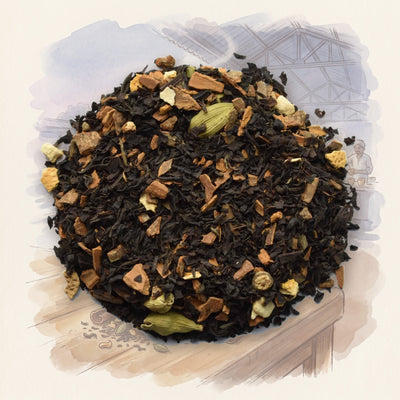
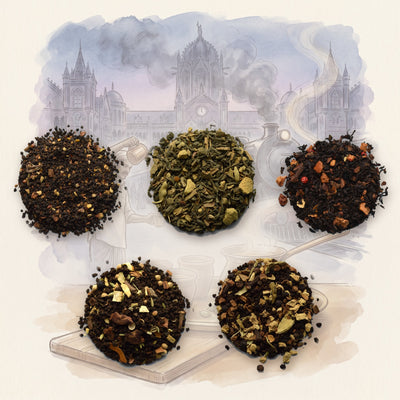
Spicy Chai is the platform cup, Assam black tea and ten spices. Kashmiri Chai is built on Chunmee green tea with warm spice, closer to kahwah than to the pink cup. Vanilla Chai, Organic is the dessert pan at home, Masala Chai makes it on rooibos, caffeine-free, and Chocolate Chile Chai is mole in a cup.