Jingmai Mountain, in the south of Yunnan. The tea trees here grow under the forest canopy, the way the Blang and Dai peoples have grown them since at least the tenth century, and their Tea Ancestor belief holds that spirits live in the tea gardens. In 2023 UNESCO put the old tea forests of Jingmai on the World Heritage list, the first tea landscape it has named.
The tea takes its name from a market town. From Pu'er the Tea Horse Road climbed through Dali, Lijiang and Shangri-La to Lhasa. Tibetans have drunk tea since the eighth century; from the Song dynasty on, tea went up the mountain and horses came down. Porters carried loads often heavier than themselves. In Tibet the tea was boiled long and churned with butter and salt.
The prefecture came by conquest. In 1727 and 1728 the Qing viceroy Ortai put down resistance in south-west Yunnan led by the Diao clan; chiefs who resisted were executed or banished, and in 1729 their land became Pu'er prefecture.
Pu-erh is the tea that is actually fermented, by moulds, bacteria and yeasts, where black tea is only oxidised. Raw pu-erh ages slowly. In 1973 the Kunming Tea Factory worked out wet piling, which ferments the leaf fast, to meet a demand that had surged in Hong Kong since the 1950s. Since 2008 the name has been kept, by law, for tea from Yunnan.
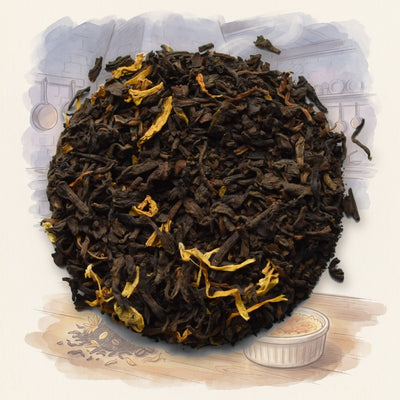
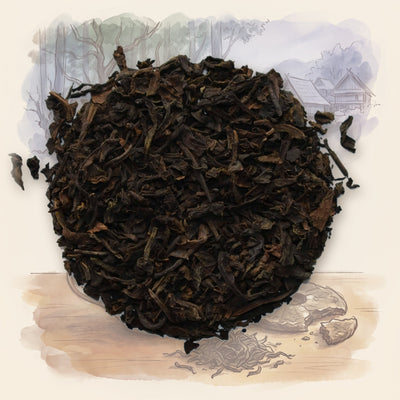
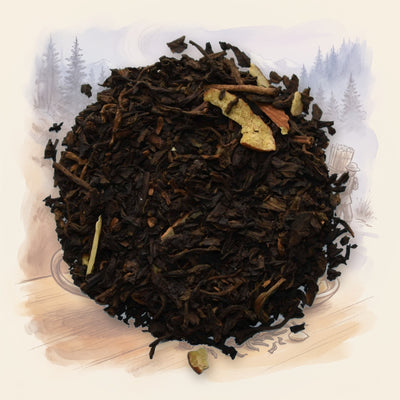
Pu-erh, Three-Year Vintage, Organic is the plain leaf, earth and forest floor and wet stone. Scottish Caramel, Pu-erh, Three-Year Vintage, adds almond pieces for butterscotch by the fire, and Pu-erh, Crème Brûlée, with coffee and calendula, is burnt sugar in a cup.