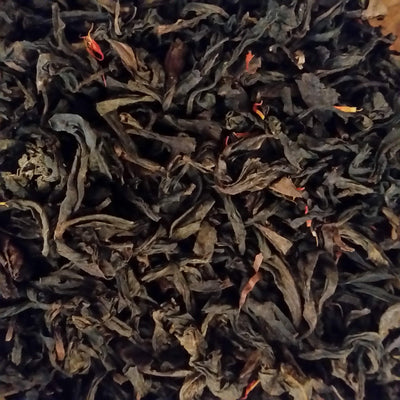
Loose Leaf Oolong Tea
Read its story →
Legend has it that in the Yongzheng years of the Qing an old farmer named Wei Yin lived near a run-down temple with an iron statue of Guanyin, the Goddess of Mercy. In a dream she sent him to a tea bush growing in a crevice among the rocks. He raised it, and the tea took her name, and tie, iron, for its dark, heavy leaf. In another telling a scholar named Wang gave the plant to the Qianlong Emperor, who named it for Guanyin Rock. What is documented is plainer: Tieguanyin is a nineteenth-century tea of Anxi, in southern Fujian.
Oolong means black dragon, and nobody agrees why. The most accepted account traces it to the Dragon-Phoenix tribute cakes: when loose tea came into fashion, the long dark leaves were called black dragon. The story goes that a hunter called Wu Liang, nicknamed dragon, was distracted by a deer and forgot the leaves he had picked; by morning they had darkened, and the tea was the best he had tasted.
The dragon crossed to Taiwan. After the Second Opium War the Treaty of Tientsin opened Tamsui as a treaty port in 1860, and in 1867 a Scottish merchant, John Dodd, started a company selling Formosa Oolong to the world. Tea soon ranked first among the island's exports, ahead of sugar and camphor.
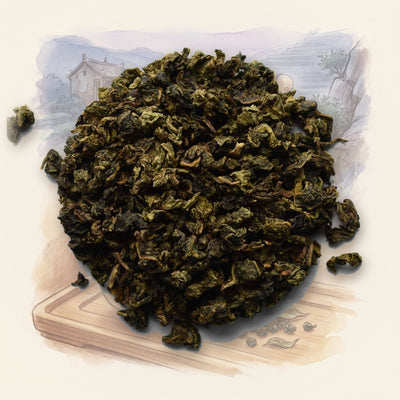
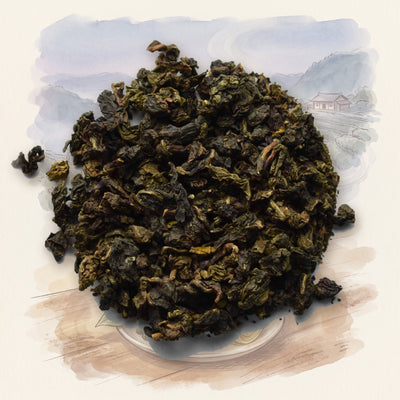
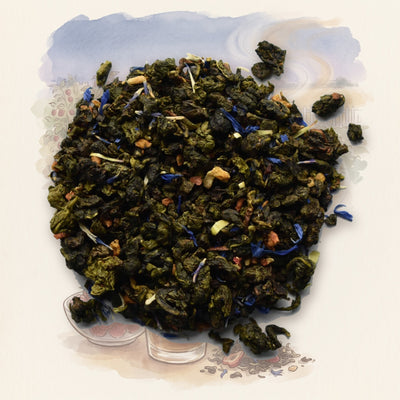
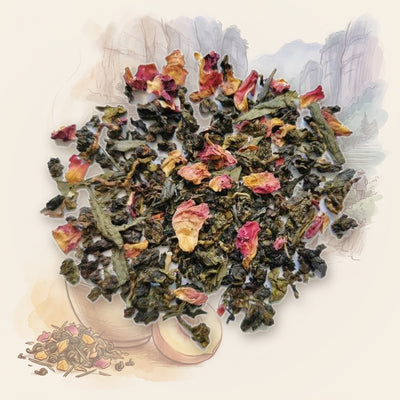
Iron Goddess Of Mercy Oolong, Organic is the pot to steep again and again, orchid to honey to mineral. Milky Oolong, Organic is butter and sweet cream. Oolong Peach and Oolong Berry Blend are the summer glasses. Smoked Maple Oolong, Organic is the door home, campfire and syrup, the most Canadian tea on the shelf.
Results
- 195°F / 90°C
- Steep 3–5 minutes
- Use 1 tsp per 8oz
- Re-steep three or four times; it changes character with every round